Prices of caustic soda have risen by nearly 30 per cent over the last four months due to healthy demand growth and lower supplies following closure of manufacturing plants in Europe and China.
According to the latest report from rating agency ICRA, caustic soda prices for spot delivery in the US jumped to $581 a tonne in January from $456 a tonne in September. Chinese suppliers are quoting a price of $612 a tonne, up from $498 a tonne in September. Caustic soda prices have jumped between 35 and 45 per cent between April and December.
One of two major reasons for the price rise is the decision by the EU in December 2013 to discontinue the mercury process for chlor-alkali units (around 26 per cent of total capacity in Europe) beyond December 11, 2017. Conversion to membrane cell technology is an expensive exercise which along with the high cost of power in these countries made several units unviable. This is expected to keep Europe in short supply over the medium term.
“Chlor-alkali plants in China, the largest player globally, are running at reduced capacity following poor chlorine realisations besides stricter environmental norms being enforced by the government. Additionally, the growing global demand has led to buoyancy in caustic soda prices,” said K Ravichandran, senior vice-president and group head, corporate sector ratings, ICRA.
The chlor-alkali industry is driven by demand for chlorine whose major derivative polyvinyl chloride (PVC) is used largely in the housing market. Since chlorine is a co-product of caustic soda, the demand and offtake of chlorine impact its production.
This is, however, in contrast to the Indian market, where caustic soda enjoys a relatively more mature and developed market than that of chlorine. Due to restrictions in the sea-borne chlorine trade, domestic chlorine prices are largely unrelated to global prices unlike import-parity prices for other commodities.
Following large capacity expansion in 2016-17, domestic chlorine prices, especially in the western and northern regions, decreased from low positive or negative of Rs 2,000 a tonne in 2015-16 to deep negative of Rs 6,000-7,000 a tonne in the second half of 2016-17 (chlor-alkali producers have to pay this amount to chlorine consumers). Chlorine prices have improved to negative of Rs 2,000-3,000 a tonne due to healthy demand absorbing the excess supply in the market, and going forward, chlorine prices are expected to remain stable or improve marginally.
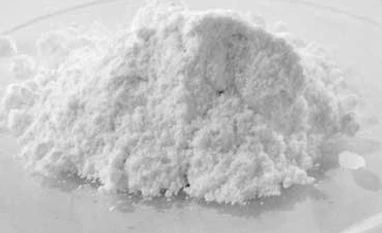
India’s caustic soda installed capacity is expected to grow from 3.66 million tonnes in 2016-17-end to 4 million tonnes in 2018-19 following expansion by players like Grasim Industries and DCM Shriram.
Moreover, capacity will continue to increase over the long term with the project of GACL-Nalco Alkalies & Chemicals at Dahej with a capacity of 800 tonnes per day coming on stream.
On the demand front, while domestic caustic soda consumption increased by 4.9 per cent per annum during 2012-2017, it reflected a slowdown with growth of 1.6 per cent in 2016-17 against 3.9 per cent in 2015-16 following demonetisation in November 2016.
“Domestic consumption of caustic soda and chlorine is expected to show 5-8 per cent growth over the medium term. With healthy performance in recent years and expectations of an increase in demand by key consuming sectors, the industry may likely witness some capacity additions,” Ravichandran said.
“Demand growth from aluminium and textiles could be robust over the medium term, while segments like soaps and detergents, and organic and inorganic chemicals may report moderate and steady growth in caustic soda consumption. Although domestic consumption of chlorine is sensitive to any adverse regulations, healthy prospects of exports for chlorine derivatives will be the driver for chlorine demand growth,” Ravichandran added.





