Cong manifesto: Hidebound & high cost, say Analysts
BJP, the key opponent, is yet to issue its manifesto but it is believed the party might refrain from mentioning the contentious issue of job reservation
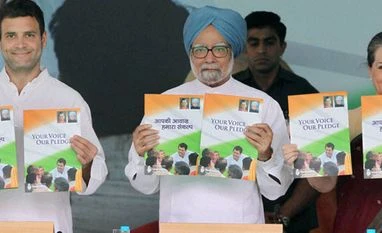
Puneet Wadhwa With an eye on reforms and a promise to continue a rights-based entitlement regime, such as on housing and health care, the Indian National Congress released its manifesto on Tuesday for the general elections.
Amid a slowing economy and less growth in jobs, among the other key highlights was a promise to unveil a new job creation agenda and create a consensus on private sector job reservation if voted back to power. It also promised an investment of $1 trillion in the infrastructure sector over the next decade and aims to achieve 10 per cent annual growth in the manufacturing sector. Also, an independent regulator for natural resources and access to electricity services for all in urban areas and 94 per cent in rural areas.
The Sonia Gandhi-led party promised to restore real gross domestic product (GDP) growth to above eight per cent within the next three years. And, to reduce the fiscal deficit to three per cent of GDP by 2016-17, beside implementation of a Goods and Services Tax and Direct Taxes Code within a year.
Experts say the promises can be an additional burden on the fiscal situation.
“The manifesto suggests the focus will be on getting the economy back on track. However, the entitlement-based policies will continue and widened to cover housing and health, entailing a higher fiscal cost. Policies such as raising the minimum support price for farmers will also be inflationary,” say Sonal Varma and Aman Mohunta of Nomura. “Their other suggestions regarding economic reforms have been on the table for a long time. In our view, the differentiating factor in the next elections will be the ability and the willingness of the new government to take up these reforms.”
Deven Choksey, managing director and chief executive officer at K R Choksey Securities, feels the manifesto is long on words and short on commitment. He says most of the proposals have been in place for 10 years; almost all issues are the ones they’d been highlighting earlier.
“One detrimental thing is that they continue to talk about spending money without generating income. The country is suffering due to this. At the end of the day, it is the taxpayer that be paying for the wish list. Even if you look at the infrastructure push in the manifesto, it cannot happen without pumping in money. So, without generating income, how can one invest or even distribute money?” he says. Adding: “They have also come out with a prejudiced policy, wherein they want to bring in reservation in the private sector. After over 65 years of Independence, if one cannot generate jobs and insist India Inc should employ workforce based on caste and religion, that is not acceptable. As a result, India Inc and the country will not be competitive thereafter. People should be employed based on their talent and not caste or religion.”
The Narendra Modi-led Bharatiya Janata Party, the key opponent, is yet to issue its manifesto but it is believed the party might refrain from mentioning the contentious issue of job reservation.
“If we were to list only one policy reform that India needs to implement to move out of the current stagflation-type environment, it would be fixing labour policy. We believe persistent high nominal wage growth, even as GDP growth and job creation have collapsed, can only be explained by the intervention of policy makers in the labour market,” feels Chetan Ahya, Asia–Pacific economist at Morgan Stanley.

 "Cong manifesto: Hidebound & high cost, say Analysts")


 Connect with us on WhatsApp