Cotton sowing to drop 10-15%
At several places, prices slip below MSP; market remains sluggish without exports
Rutam VoraSharleen D'souza Vadodara/ Mumbai Cotton farmers are slowly losing their fancy towards the fibre crop. Lower yield and reduced realisation are likely to see them shift to other crops this kharif season, which starts from next month, leading to a 10-15 per cent drop in cotton sowing.
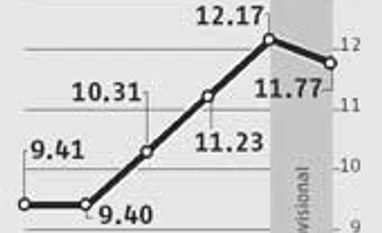
According to projections given by the Textile Commissioner of India, the area under cotton cultivation is likely to be around 11.77 million hectares in 2012-13. In 2011-12, the area under cotton cultivation was reported at 12.17 million hectares.
"This year, cotton cultivation will drop and more farmers will shift to other crops like groundnut. There are issues of less prices and falling yield. There should not be surprise if cotton area falls this year," said N M Sharma, managing director, Gujarat State Co-operative Cotton Federation Ltd.
According to Sharma, farmers received lesser prices than last year. Also, the weather played spoilsport last year, pushing the cotton sowing down.
"Farmers are seeking cotton prices to be around Rs 1,000 per 20 kg, whereas in the current market situation, the prices hover around Rs 720 to Rs 780 per 20 kg for raw cotton. In such a situation, cotton sowing will drop in the range of 10-15 per cent," noted Ahmedabad-based cotton expert Arun Dalal.
In Andhra Pradesh, the price of kapas (unginned cotton) had already fallen below the minimum support price (MSP) in April, but rebounded due to Cotton Corporation of India (CCI) buying cotton.
The MSP of kapas in Andhra Pradesh is currently Rs 3,900 per quintal and 20 days ago, the price was Rs 400 to Rs 500 below MSP.
Exports are also weak, which is further putting downward pressure on the prices, discouraging farmers from taking up the crop next season. Insiders maintained that Chinese buying has stopped and no further export of cotton is taking place.
"There was sufficient demand from mills last year, which controlled a possibility of oversupply in the market. However, now, mills' demand is also weak due to global economic conditions," said Dalal.
Added Piyush Kotecha, a Gujarat-based indenting agent: "Farmers have no option but to sell their produce below the MSP prices as they need the money to buy cotton seed for the upcoming kharif season. CCI and Nafed (National Agricultural Cooperative Marketing Fedration of India) have intervened in Maharashtra and Andhra Pradesh, and have managed to increase the price of kapas, but have not done so in Gujarat and thus farmers here have sold their produce below the MSP."
Cotton importers in China (which accounts for about 60 per cent of India's cotton exports) have been told that if they import, they would have to buy three times that amount from the Chinese government agency. This has hit India's cotton exports to the neighbouring country.
Bangladesh, the second largest importer of Indian cotton, has also cut down its cotton imports, besides Pakistan, which turned to Australia and African countries for cheaper cotton.
Indian mills are also not buying cotton and have imported cotton as it is cheaper compared to domestically-sourced cotton. "The overall scenario is very bleak for cotton at the moment on the domestic market as well as international market," said Rahul Kotecha, a Coimbatore-based indenting agent.
This year, the Cotton Advisory Board has pegged cotton exports at seven million bales, which the industry earlier thought was unachievable due to weak demand for the commodity from major buyers.

 "Cotton sowing to drop 10-15%")


 Connect with us on WhatsApp