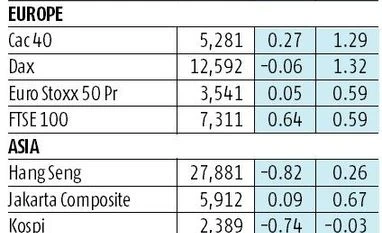
The Nifty 50 on Friday lost 1.6 per cent to end at 9,964, while BSE Sensex lost 1.4 per cent to close at 31,922.4. The rupee, after dropping to a six-month low of 65.16, ended the week at 64.8 against the dollar.
Experts said the immediate concern for investors is whether the government is able to boost economic growth without straying much from the fiscal consolidation path. There is growing pressure on the government to boost the economy after gross domestic product (GDP) growth fell to 5.7 per cent in the June quarter.
The Centre is planning to spend as much as Rs 50,000 crore to provide a stimulus to the economy. While experts are not sure how soon such a measure to prop up growth rates and to what extent, economists say this could increase the fiscal deficit to as much as 3.7 per cent, from the budgeted 3.2 per cent, of the GDP. Fiscal expansion is likely to put upward pressure on bond yields and dash market hopes of interest rate cuts by the Reserve Bank of India (RBI).
Already, the yield on 10-year government securities (g-secs) has been on the rise in the past two months. Yields and bond prices are inversely correlated, so a rise in yield leads to fall in bond prices and vice-a-versa. The 10-year g-secs yield has risen 18 basis points since September 1, from 6.483 to 6.663 on September 22, indicating a rise in risk-off sentiment.
The gains in the Indian equity markets this year have coincided with softening of the interest rate, which has made equity markets relatively more attractive than the bond markets. However, if bond yields rise, it could hurt stock prices and also raise the risk of investors moving from equities to debt. What’s also hurting sentiment is the delayed recovery in earnings of India Inc.
“Domestic flows are very strong, but any earning hiccups in the coming quarters may limit these inflows. The markets will look for more cues from the government on its stimulus programme and road map on fiscal deficit. Any sharp depreciation of the rupee will heighten FII (foreign institutional investor) outflow,” says Vinod Nair, head of research, Geojit Financial Services.
FIIs have already been net sellers of Indian equities recently. In September, they have been sellers in 13 of the 15 trading sessions.
The US central bank will reduce its monthly bond-buying by $10 billion and gradually increase this to $50 billion a month, as the US economy gains strength. The move will increase cost of funds, which so far has been cheap.
“The ongoing monetary tightening in the US, with gradually rising official interest rates and now a gradual reduction in the supply of dollars through quantitative tightening should help boost the dollar after its fall so far this year,” says Shane Oliver, head of investment strategy, AMP Capital.
The dollar has been depreciating against most global currencies this year, which has acted as a tailwind for equity markets, as it has led to higher global FII flow. However, with the dollar expected to strengthen, acceleration of FII out-flow can’t be ruled out.
“Volatility will remain high in the coming week as well, due to several important data and events. The scheduled derivatives expiry on Thursday will keep traders busy throughout the week. Further, government will unveil macroeconomic data of core sector figures and India’s budget balance on September 29. But above all, developments related to the lingering geopolitical tussle will dictate the market trend,” said Jayant Manglik, president, retail distribution, Religare Securities.
One subscription. Two world-class reads.
Already subscribed? Log in
Subscribe to read the full story →
Smart Quarterly
₹900
3 Months
₹300/Month
Smart Essential
₹2,700
1 Year
₹225/Month
Super Saver
₹3,900
2 Years
₹162/Month
Renews automatically, cancel anytime
Here’s what’s included in our digital subscription plans
Exclusive premium stories online
Over 30 premium stories daily, handpicked by our editors


Complimentary Access to The New York Times
News, Games, Cooking, Audio, Wirecutter & The Athletic
Business Standard Epaper
Digital replica of our daily newspaper — with options to read, save, and share


Curated Newsletters
Insights on markets, finance, politics, tech, and more delivered to your inbox
Market Analysis & Investment Insights
In-depth market analysis & insights with access to The Smart Investor


Archives
Repository of articles and publications dating back to 1997
Ad-free Reading
Uninterrupted reading experience with no advertisements


Seamless Access Across All Devices
Access Business Standard across devices — mobile, tablet, or PC, via web or app
)