They bet on UPL and Rallis India, among others, due to manufacturing capabilities, export opportunity and a strong domestic product portfolio. On the regulatory front, implementation of the Pesticides Management Bill, which calls for stricter compliance on registration, compensation to farmers and penalties might lead to a shift of business to organised players. Here are three companies that stand to gain.
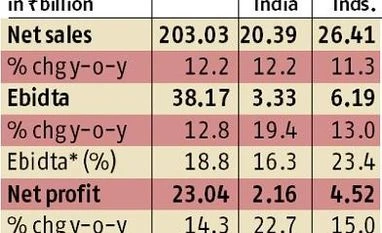
UPL India’s largest agrochem entity is best placed to tap the sizable opportunity as $3-4 billion of products go off-patent over the next three to four years. What is in favour is UPL’s backward integration in manufacturing and presence across the agriculture value chain of seeds (through subsidiary Advanta), agrochem, fumigants and storage.
In addition to the growth markets of India and Latin America, it is looking at others, including China, Nigeria and Kenya. Use of power brands and extensions, better product mix, new products, and cost rationalisation should help UPL grow revenue and earnings by 12-16 per cent over FY17-20 period. Strong earnings potential, a robust return ratio of 20-25 per cent, low leverage, cash of Rs 28 billion and a diversified business model are reasons for investors to look at the stock, according to analysts at BOB Capital Markets.
Rallis India The company has twin triggers of growth in export, driven by contract research and manufacturing (CRAMS), and the domestic business. Exports, which have done well over recent quarters, are expected to improve further, on the back of favourable channel inventory positions in key global markets, new product registrations and ramp-up in a new pharmaceutical molecule. Higher production at its Dahej plant and higher orders should boost operating leverage.
In India, the company lost 240 basis points in market share over FY12-16. It is now regaining some of the lost ground, led by acceptance of new products and better credit terms on top products to its dealers, according to Antique Stock Broking. Given the company’s distribution network, new launches and branded farm solutions, the analysts expect it to see annual 10 per cent growth in the domestic market over FY18-20, as compared to the muted three per cent in FY11-17.
Higher seeds contribution (Metahelix) and exports are expected to boost its margins. Its net profit is expected to grow 20 per cent annually over FY18-20 and, like UPL, its return ratios are healthy at over 20 per cent.
PI Industries With custom synthesis and manufacturing (CSM) accounting for 70 per cent of its revenue, PI Industries is well placed to ride the global recovery in agrochem. The management expects the CSM business to return to a high growth phase in FY19. Its order book continues to be strong at $1.15 billion, up 40 per cent year-on-year, with the pipeline also healthy.
Analysts at Credit Suisse say improvement in global demand could lead to faster conversion of the order book into revenue. They expect the latter to grow 20 per cent annually over FY18-20. Performance of the domestic business (30 per cent of revenue), below par in the December quarter, is also expected to improve, led by new product launches.
The six products launched in FY18 and a few planned for launch in the kharif and rabi seasons, are expected to reflect in domestic growth.
With CSM revenue recovering and the domestic business expected to see steady growth, analysts expect PI Industries to post 15 per cent annual growth over FY18-20. Strong return ratios, which in FY17 were upward of 33 per cent, a debt-free balance sheet and a healthy cash flow are positives.

 "From UPL to PI Industries, favourable weather for agrochem companies")











