While coal imports in India are on a declining trend as Coal India has stepped on the gas and the nation’s thermal plants are stocked with 20-days’ coal reserves, the price of the fossil fuel will continue to be in excess of $50 a tonne for the 6,000 GCV (gross calorific value) variant.
The recent global surge in coal prices, however, is not on account of higher demand, but on account of China reducing its supply.
According to Fitch Ratings, the strong rebound in key Asian thermal coal reference prices since the beginning of this year is a function of the Chinese government's regulations surrounding supply management, and is not supported by improvements in demand fundamentals.
The price increases have raised the risk of slowing, if not, halting Beijing's supply-side structural reforms in the coal sector.
According to the report, China's coal production dropped 9.7 per cent during the first half of 2016 against the same period of 2015 as the country’s government in April reduced the number of statutory working days for coal miners to 276 a year from 330.
This policy resulted in global coal production falling, with Chinese production contracting more than demand, which fell by 4.6 per cent. Falling inventory and a wider gap between domestic coal and sea-borne cargo prices drove import volumes up by 8.2 per cent during the first half of the year.
This added only 8.16 million tonnes (mt) to China's coal import volumes, but it had a big impact on Asia-Pacific seaborne prices indices, with the benchmark Newcastle 6,000 kcal free-on-board prices rising 31 per cent from end-May to early September. China's Qinhuangdao 5,500 kcal coal prices also climbed 33 per cent over the same period.
Although the move benefited the Chinese coal industry, resulting in Coal India subsequently raising its prices by 6.29 per cent in tune with the global trend, Indonesian coal miners benefited less from the recent price rebound. Around 37 per cent of the Indonesian coal output is normally purchased by India. However, with Coal India being mandated to cater to the demand of the coal industry, Indonesian exports were hit.
Also, India's doubling of a volume-based clean-energy tax to Rs 400 per tonne of coal in February adversely affected the demand for Indonesia's low heat-value coal.
Indonesian coal production and exports fell 10.5 per cent and 14.3 per cent, respectively, in the first four months of 2016.
In turn, however, India has increased imports from South Africa, which exports coal of higher energy content. Also, heavy rains in the coal producing countries in Asia hampered production which resulted in lesser quantity being mined.
“The prices will remain on the higher side if China continues to maintain a low production volume,” an analyst with Motilal Oswal said. According to the analyst, Indian coal consumers, however, will not feel the heat because they can shift to domestic coal.
“Coal India has decreased the prices of its high-grade coal, which is supposed to pick up demand from the cement and sponge iron sectors,” the analyst said.
The coastal thermal plants, which are predominantly dependent on imported coal, may feel a marginal impact on account of higher prices. “However, they still have the option to switch to Indian high-grade coal,” the analyst added.
Fitch Ratings, however, stated that the tighter supply in China will be susceptible to policy changes. China's available capacity remains more than adequate with only 95 mt of excess capacity eliminated in the January-July period, which is 38 per cent of the government's phase-out target for 2016.
The Shanghai Securities Journal reported the Chinese government was in discussions with major coal miners to increase flexibility in the working-day controls to manage risks from higher prices derailing the supply cuts.
With the global price increase, some Chinese coal companies have become more comfortable raising their capital expenditure. China Shenhua Energy Company raised its 2016 capex by 37.5 per cent to $4.12 billion, although 75 per cent of this relates to its investments in power generation capacity. Similarly, Yanzhou Coal Mining Company raised its already aggressive 2016 capex by 10.6 per cent to $1.41 billion.
Coal India, too, has raised its capex by 10.9 per cent to $1.92 billion for 2016-17.
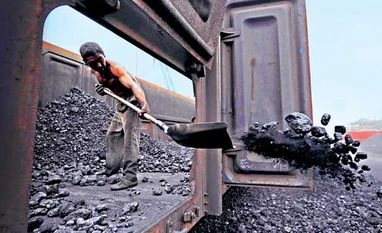
COAL-RELATION - China’s coal production dropped 9.7% during the first half of 2016, compared to a year ago
- Reducing number of statutory working days resulted in global coal production falling

 "Global coal prices to stay strong if China maintains reduced production")

