Gold jewellery imports from Asean countries zoom
If unchecked, rising imports can pose a threat to Indian jewellery fabricators and bullion dealers, say analysts
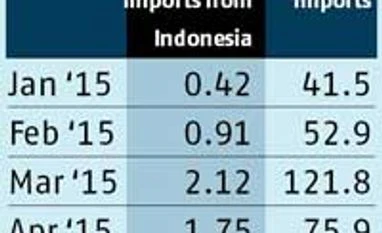
Rajesh Bhayani Mumbai About a dozen importers have been importing gold, taking advantage of India’s free trade agreement (FTA) with Association of Southeast Asian Nations (Asean) countries. In May, the import of such gold jewellery at one per cent duty (against 10 per cent duty on gold) has zoomed to six tonnes against a measly 400 kg in January.
Analysts say if unchecked, this can pose a major threat to Indian jewellery fabricators and bullion dealers. India has FTAs with several Asean countries, including Indonesia, Malaysia, the Philippines, Singapore, Thailand, Brunei, Cambodia, Laos, Myanmar, and Vietnam.
According to GFMS Thomson Reuters, imports have been happening from Indonesia since July last year. The flow has begun from Malaysia as well from May this year. The imported jewellery is melted again and sold to the local market. Even after including the financing cost and premium for gold in Indonesia, the total cost of importing is just three per cent of the value of gold in the market, thereby helping these importers net a differential of seven per cent.
Usually 22-carat gold is used for making jewellery, but industry sources say even 24-carat jewellery is being imported in the form of pendants, bangles and chains.
In India, these can be converted back to gold bars for further selling. The sources said jewellery imported through this route is exported and duty drawback is being claimed by generating an invoice supporting this sale. For some reason, the consignments are getting cleared only at Hyderabad, Kolkata and Chennai ports.
The route of importing jewellery at one per cent duty gained traction a couple of years ago, when the gold import duty went up to 10 per cent and there were stringent import rules for gold, including the 80:20 scheme, which mandated export of 20 per cent gold with value addition for every consignment for selling remaining 80 per cent in the domestic market.
The All India Gem and Jewellery Trade Federation had told the government that import of finished goods (jewellery) at one per cent duty was an anomaly and needed to be corrected in the interest of Indian artisans.
Thereafter, the import duty on jewellery was raised to 15 per cent. For imports from Asean countries under FTA, the duty was retained at one per cent but additional conditions such as “they should have certificate of origin and 20 per cent value addition” were imposed.
Even after that, import of jewellery from Thailand continued to be at one per cent duty but 20 per cent value addition condition was interpreted as an option due to the way it was mentioned in the notification. Later, the Customs department imposed heavy penalty as jewellery importers had not adhered to the value addition norm and the cheap import issue died down for a while.
However, now these traders show “value addition” by showing a certificate calculating the cost of mining of gold in dore (unrefined) form, cost of refining dore to gold bars and cost of manufacturing jewellery, which work out to more than 20 per cent. However, so far imports have been happening from Indonesia and Malaysia, which have gold mines and hence the value addition in the form of mining and dore refining cost can be shown along with the certificate of origin.
Sudheesh Nambiath, GFMS, Thomson Reuters, said, “It is an irony that while the government wants to push forward the 'Made in India' theme, such trade agreements overlooks the need to protect the industry with some fine skills.”

 "Gold jewellery imports from Asean countries zoom")


 Connect with us on WhatsApp