HDFC AMC's high valuation to stay as shares gain 65% on market debut

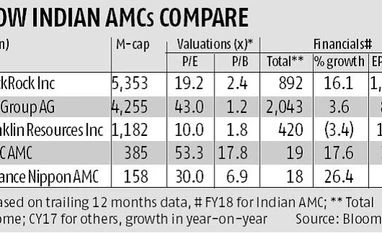
Seen as the best proxy to capture the financialisation theme, analysts feel AMCs including HDFC deserve to trade at a premium
.
Hamsini Karthik Mumbai
Last Updated : Aug 08 2018 | 1:49 PM IST
Should investors cash out of the HDFC Asset Management Company stock after its stupendous listing was a question in most investor forums. While Monday’s 65 per cent gain on its market debut could have prompted many to opt out, a large section of analysts believe otherwise.

“Book-profit was the call many had on Avendus Supermarket (D-Mart’s parent company) soon after its listing. However, it has had a terrific climb since then. Investors could be repeating the mistake with HDFC AMC,” warns a senior analyst with a foreign brokerage.

While the broader markets have also risen in the past 16 months, aiding the D-Mart stock, and the future might be volatile, analysts are not deterred. Nomura and Motilal Oswal Financial Services are among the brokerages with a positive view on asset management companies (AMCs) and term this business the best proxy to capture the financialisation of savings theme, thereby explaining why it will do well in the foreseeable future.

Questions have been raised on whether this factor (financialisation) alone supports the high asking rate. Sanjiv Bhasin, vice-president at IIFL, says it is an important factor. “There is a dearth of quality stocks, particularly in the financial services sector. Also, the potential that equities have, considering where interest rates are headed and, more important, how quality names such as Hindustan Unilever, Tata Consultancy Services, and Bajaj Finance have always traded at a premium, supports the expensive valuation of AMC stocks,” he feels.


There are concerns, too. One argument is that the increasing share of passive funds, mainly exchange-traded funds (ETFs), in the overall equity funds mix will limit the earning potential. While true, data from the Association of Mutual Funds in India indicate that despite a 60 per cent compounded annual growth in ETFs over the past five years, their share to total equities’ net inflow is only eight per cent.

Analysts at Nomura say a large part of the surge in ETFs is on account of the Employees' Provident Fund Organisation (EPFO) being allowed to allocate five per cent of its incremental inflow in equity ETFs in FY16, raised to 10 per cent the next year and now at 15 per cent. This would explain the surge in equity ETFs in the past three years. “Once the limit increase is halted, the flows of EPFO into ETFs will also likely grow in line with nominal salary increases,” it adds.

Further, with the household penetration level in India at only 10 per cent, as against 45 per cent in America, brokerage Nomura sees limited risk of passive funds taking over active funds in the medium term. A higher mix of active funds is crucial, as they are more profitable, enabling AMCs a higher fee.

Next is whether there is more room for operating leverage, given the recent regulatory cap with respect to the total expenses ratio or TER (a key factor affecting profitability), in addition to rising competition. Analysts do acknowledge these concerns and believe it could compress profitability by five to 10 basis points. They say strong growth in assets under management (AUM) is imperative. For instance, Reliance Nippon Life Asset Management managed to maintain its overall revenue as a proportion of AUM at a stable 0.6 per cent in the June quarter despite the regulatory need to reduce TER, led by strong equity AUM growth, analysts at CIMB note. This, therefore, isn’t expected to be a long-term negative for the sector.

Finally, while overall market vagaries could disturb the earnings potential of AMCs, Bhasin says investors shouldn’t miss the bus for this reason — this is the underlying risk of the business.

One subscription. Two world-class reads.

Already subscribed? Log in

Subscribe to read the full story →
*Subscribe to Business Standard digital and get complimentary access to The New York Times

Smart Quarterly

₹900

3 Months

₹300/Month

SAVE 25%

Smart Essential

₹2,700

1 Year

₹225/Month

SAVE 46%
*Complimentary New York Times access for the 2nd year will be given after 12 months

Super Saver

₹3,900

2 Years

₹162/Month

Subscribe

Renews automatically, cancel anytime

Here’s what’s included in our digital subscription plans

Exclusive premium stories online

  • Over 30 premium stories daily, handpicked by our editors

Complimentary Access to The New York Times

  • News, Games, Cooking, Audio, Wirecutter & The Athletic

Business Standard Epaper

  • Digital replica of our daily newspaper — with options to read, save, and share

Curated Newsletters

  • Insights on markets, finance, politics, tech, and more delivered to your inbox

Market Analysis & Investment Insights

  • In-depth market analysis & insights with access to The Smart Investor

Archives

  • Repository of articles and publications dating back to 1997

Ad-free Reading

  • Uninterrupted reading experience with no advertisements

Seamless Access Across All Devices

  • Access Business Standard across devices — mobile, tablet, or PC, via web or app

Next Story



