
Here's why the new order by Indian bourses may spook foreign investors
India's three main stock exchanges said Friday they would stop licensing products and data to foreign exchanges to prevent trading from migrating overseas
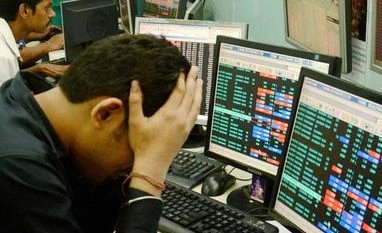 "Here's why the new order by Indian bourses may spook foreign investors")
WebinarsNew
Deep DiveNew
Explore Business Standard
India's three main stock exchanges said Friday they would stop licensing products and data to foreign exchanges to prevent trading from migrating overseas
A move by Indian exchanges to stop licensing its products and data to bourses abroad will likely force foreign investors into a tough option: migrate their trading onshore to India, with its uncertain regulatory environment and higher taxes, or give up their exposure to a hot emerging market.
India's three main stock exchanges - the National Stock Exchange, BSE Ltd and Metropolitan Stock Exchange - said Friday they would stop licensing products and data to foreign exchanges to prevent trading from migrating overseas.
For foreign investors, trading derivatives in India's exchanges means paying higher taxes and factoring in currency risks for rupee-based contracts. India also requires all foreign investors to register with regulators.
One option for foreign investors is shifting trading to India's new international finance centre in the western state of Gujarat, which offers dollar-based derivatives contracts, low taxes and good infrastructure.
But volumes there have been negligible, while concerns remain about India's unpredictable regulatory regime, making some foreign investors wary of moving to Gujarat unless a major global exchange decides to link up with a domestic exchange there.
Staying away from India would mean forgoing a market that has surged in recent years. The NSE's main benchmark index, the Nifty 50, has gained nearly 66 percent since the start of 2014, buoyed by optimism over Prime Minister Narendra Modi's reform agenda.
"This marks a step back for the India market's internationalisation," said Margaret Yang, market analyst for CMC Markets in Singapore. She added that it shut the door for foreign investors to gain exposure to the Indian market via the offshore derivatives market, "which is more liquid and accessible".
Over the past two decades, Singapore Exchange Ltd has become the most popular way for foreign investors to bet on Indian equity indexes, mainly through the popular SGX Nifty 50 index futures that tracks the NSE's main index.
A paper by India's market regulator said Singapore had a 46.3 percent market share in the nearly Rs 51 trillion ($792.66 billion) in Nifty futures last year in terms of turnover.
The actions by the exchanges come at a time when foreign investors have been hit by a 10 percent tax on long-term capital gains in equity investments imposed by India this month, reinforcing concerns about unpredictable regulations in the country.
For derivatives, investors in India are charged a 30 percent capital gains tax, compared to zero in Singapore, and also a domestic securities transaction tax.
"It will dent the returns of investors who are were trading in Nifty 50 futures in Singapore," said the head of derivatives at a foreign bank, who did not want to be named as he was not authorized to talk to the media.
The banker added that foreign investors also preferred Singapore as a destination rather than having to register in India, which is still seen as onerous by some investors despite the country's recent efforts to simplify the procedure.
Foreign investors could also opt for India's Gujarat International Finance Tech (GIFT) city, but the site has been hampered by a lack of liquidity despite active government promotion.
One way for GIFT city to develop would be to partner with foreign exchanges. SGX on Sunday said it was working with NSE to develop "solutions" for foreign investors in GIFT city.
But Yang, the analyst at CMC, said investors may in the end opt to skip India.
"Shutting down offshore channels will not necessarily benefit the onshore market," she said. "Instead, it may even result in unwinding activities in the weeks to come which will further dampen market confidence."
First Published: Feb 11 2018 | 7:09 PM IST


 Connect with us on WhatsApp