Home / Markets / News / How to analyse and navigate different market phases as a trader
How to analyse and navigate different market phases as a trader
Although there are ups and downs in the market cycle, having an in-depth understanding of these phases facilitates the trading behaviour and improves the trader's morale
3 min read Last Updated : Mar 17 2021 | 10:00 AM IST
Markets undergo phases and are cyclical. Although there are ups and downs in the market cycle, having an in-depth understanding of these phases facilitates the trading behaviour and improves the trader's morale. Secondly, the awareness of market phases reflects the inherent risk involved in the process. Moreover, having a systematic approach towards these phases helps one be profitable, in the long run.
The various phases of market cycles are:
Accumulation phase
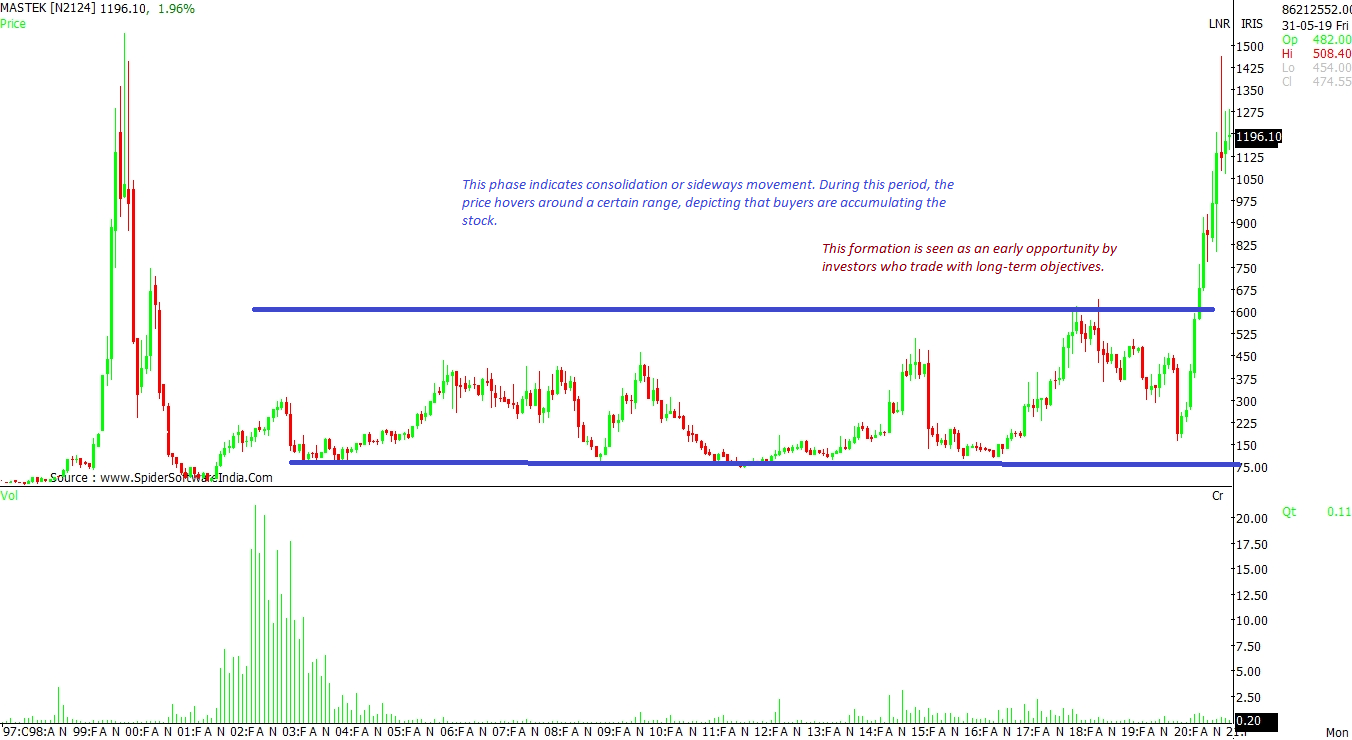
This phase indicates consolidation or sideways movement. During this period, the price hovers around a certain range, depicting that buyers are accumulating the stock. This is also referred to as the beginning of a new trend, as the price is expected to breakout from hereon. The accumulation may happen after the price has received major hammering or seen tremendous fall. Usually, such scenarios lead to price consolidation, inevitably indicating the likelihood of a new beginning. This formation is seen as an early opportunity by investors who trade with long-term objectives. CLICK HERE FOR THE CHART
Growth phase
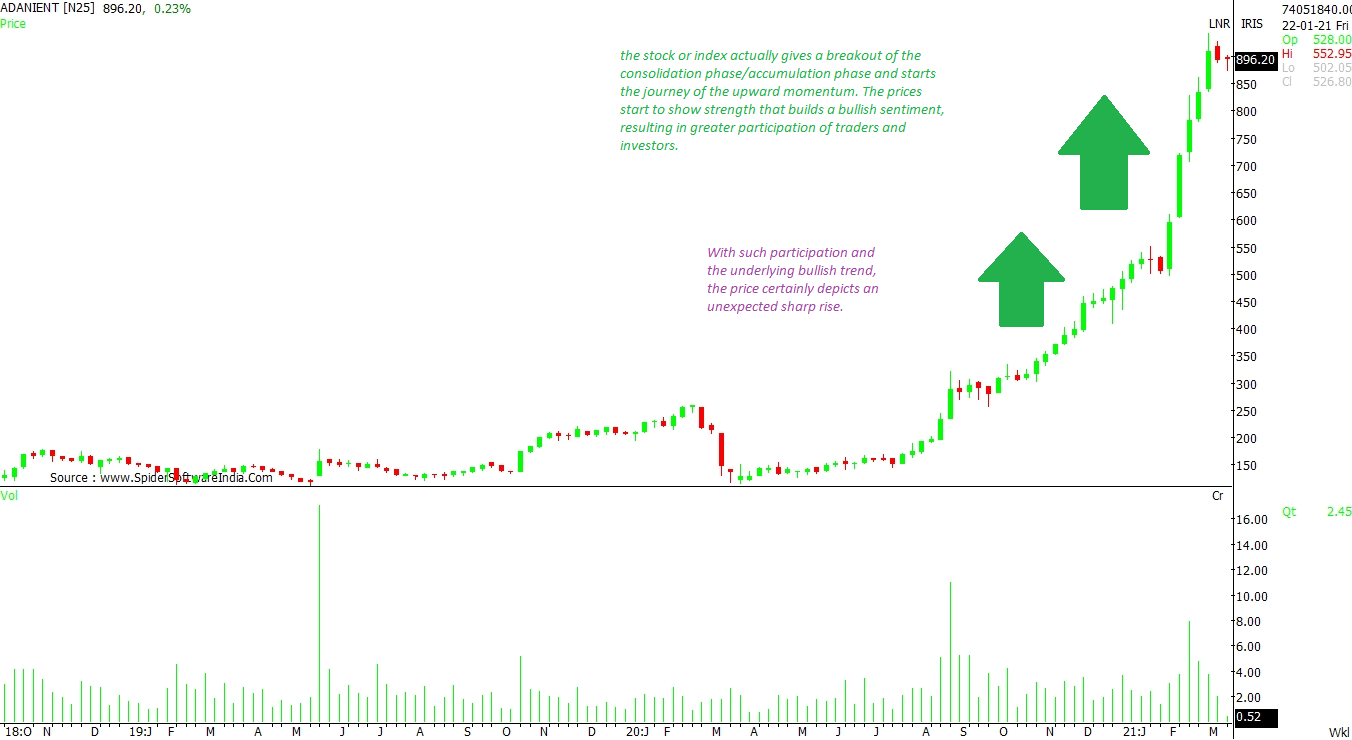
Herein, the stock or index actually gives a breakout of the consolidation phase/accumulation phase and starts the journey of the upward momentum. The prices start to show strength that builds a bullish sentiment, resulting in greater participation of traders and investors. In this phase, the optimism is very high with every participant interested in entering in the stock markets with prices expected to move higher. With such participation and the underlying bullish trend, the price certainly depicts an unexpected sharp rise. CLICK HERE FOR THE CHART
Distribution phase
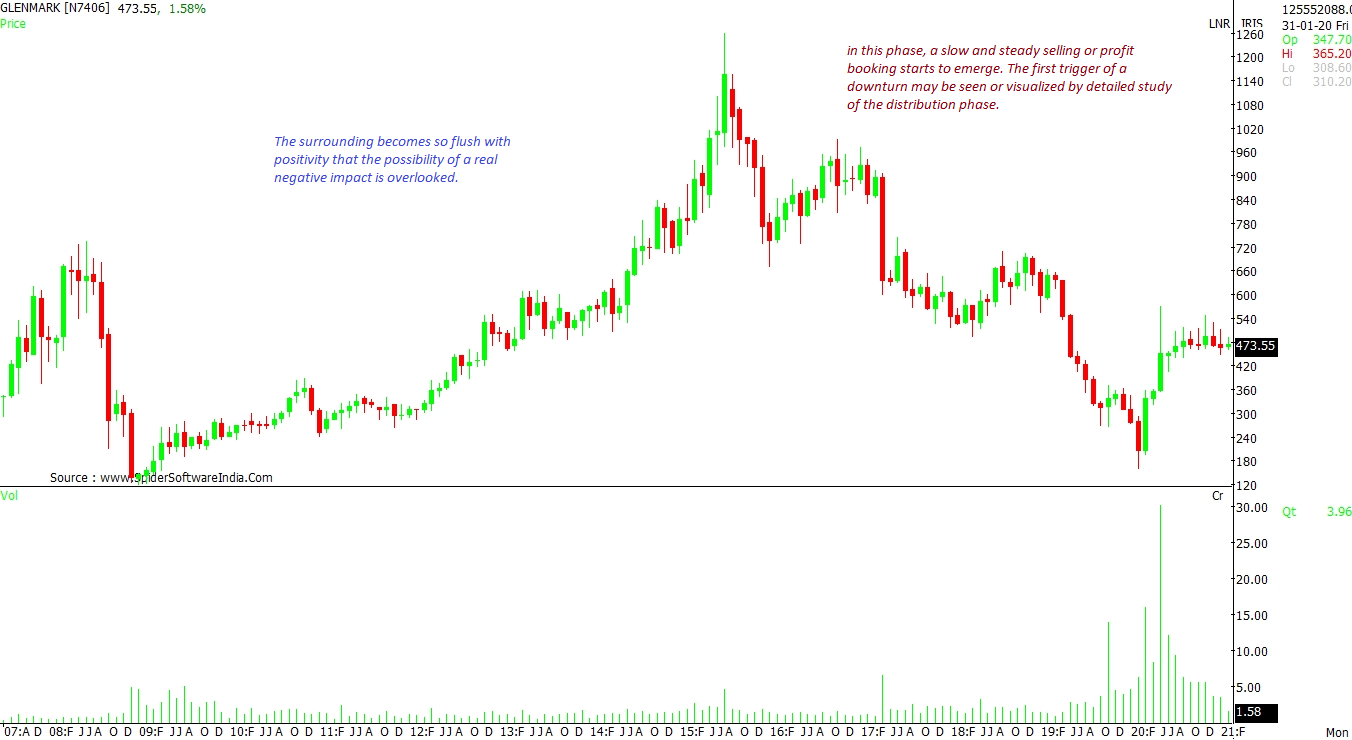
In this phase, the market participants get over excited over the ongoing trend and have unreasonable expectations from the current rally. The surrounding becomes so flush with positivity that the possibility of a real negative impact is overlooked. It is during this time that well-positioned and knowledgeable traders and investors sell their stocks. And hence, in this phase, a slow and steady selling or profit booking starts to emerge. The first trigger of a downturn may be seen or visualized by detailed study of the distribution phase. CLICK HERE FOR THE CHART
Declining phase
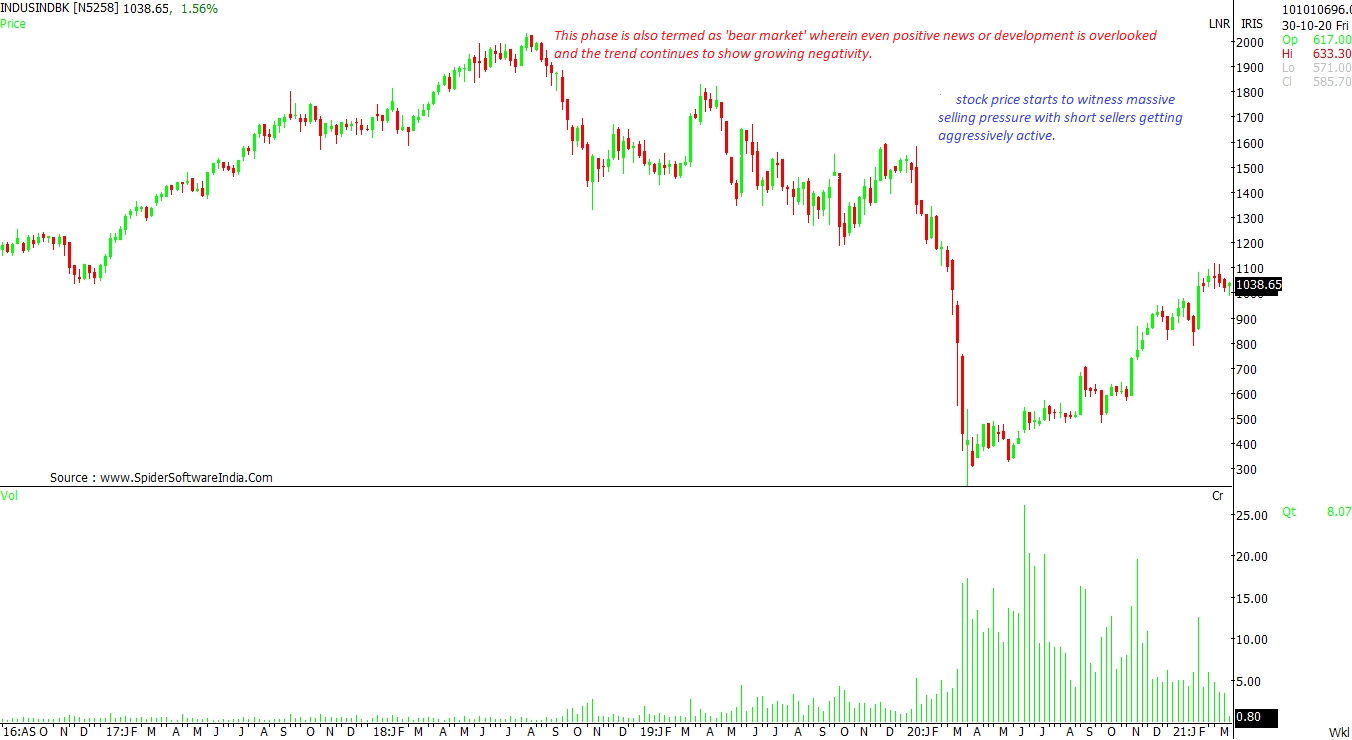
The next phase after the distribution is the declining phase in which the stock price starts to witness massive selling pressure with short sellers getting aggressively active. This phase is also termed as 'bear market' wherein even positive news or development is overlooked and the trend continues to show growing negativity. Market participants opt to liquidate their investments and all the trading positions amid expectation of further deterioration in price. This behaviour indirectly results in more negative sentiment. Sometimes, the decline phase may last for years and the emotion of regain may take time to develop. CLICK HERE FOR THE CHART