Indian investors have been completely wrong in the past five years: Samir Arora
Interview with Founder & Fund Manager, Helios Capital
Puneet Wadhwa New Delhi With key economic events such as the US Federal Reserve’s tapering of its bond buying programme and the Reserve Bank of India focussing on fighting inflation, all eyes are now on the general elections outcome in India for signals on policy reform and how the markets will shape. Singapore-based
Samir Arora, founder and fund manager, Helios Capital, tells Puneet Wadhwa he remains bullish on India, as the economy is nearing the end of a slowdown. A clear election result will coincide with and accentuate the upturn, he adds. Edited excerpts:
What is your interpretation of US economic data and how the financial markets there have reacted? Is the enthusiasm overdone? I do not think the enthusiasm towards US equity markets is overdone. Ultimately, there is a lot of money hiding in the money market. Fixed income funds are earning near-zero return and have to find a more attractive home. The US is the only country where you see really new businesses start and flourish – Tesla, Netflix, Facebook, Twitter are good recent examples. All other countries basically copy the ideas which originate there. US economic data is confusing but improving. In any case, it is such a creative society that you cannot be really bearish on it for the long term.
Do you think the (US Federal Reserve’s) quantitative easing (QE) has done more harm to global risk-related assets by artificially inflating the prices? It is difficult to say how exactly the world has been harmed by QE, except to cite standard criticisms like it led to food prices going up, creating social unrest that led to frustration with governments and led to the Arab Spring, etc.
Do you think the global equity markets are looking at a major downturn from here and the recent rout on the back of QE withdrawal was only a tip of the iceberg? By definition, a correction means prices have fallen 10 per cent. However, there is no real answer to a question which starts with an ‘if’. Since 2009, there have been 19 instances in the US where the market has fallen five per cent.
Do you think emerging markets, especially India, have become more vulnerable to the risk of a sudden stop in capital flows? How big a threat is China’s slowing growth to the global equity and commodity markets? I think Indian investors should stop using every excuse they can find in the world to avoid investing in their own equity market. In any case, they have been completely wrong in the past five years. China’s slowing will help India, for it will lead to a severe correction in commodity markets and we are net importers of commodities.
What is the road ahead for Asian currencies, especially the rupee? I believe the rupee will trade within the band of 60 to 63-64 (to the dollar), unless the results of the elections negatively surprise the markets, a low probability event, in my view.
Given its set of problems, of a slowing economy and the coming general elections, how are foreign institutional investors (FIIs) evaluating India as an investment destination? What is your outlook for key interest rates and the Reserve Bank of India’s policy stance? FIIs are obviously bullish on India, seeing their flows in the past year. Even in times of stress, they redeem proportionately much less from Indian markets.
We are also very bullish on India, for we believe we are at the near end of the economic slowdown cycle. A strong election outcome will coincide with and accentuate the upturn.
How worried are you on the election outcome in India and what impact we might see on the macros, policy reforms and, eventually, implications for the financial markets? We are not worried right now, for we believe the elections will deliver a strong verdict. Based on background, personality and experience, each investor views a glass as either half-full or half-empty. We view it as half-full.
What has been your asset allocation strategy over the past year and do you see this changing over the next 12-18 months? How have the recent quarterly earnings influenced your investment decision? Over the past seven–eight years and over the past year, our average net exposure to the market has been in the range of 60 per cent. We are currently in the range of 68–70 per cent net exposure and we might increase it to as much as 90 per cent in the next few weeks (prior to elections), based on local developments and global calm.
In terms of sectors, is it a good time to pick up banks, infra-related companies and metals? Why or why not? We own private sector banks and do not plan to buy too many beaten-down stocks. Instead, we would rather buy more of the same names we have. Beaten-down stocks might go up in case of a positive outcome but we do not have the courage or the fundamental case to buy these in large quantities today. It is better to buy more of the good stocks, though they might go up less if India’s stars are aligned. In such a case, we would still make enough money. We do not need to make the highest possible returns the market could have offered in hindsight. Many investors buy beaten-down stocks because they like to boast about the high percentage return they make. No one asks them how much of their portfolio they actually invested in such stocks.
How are you playing / treating the commodity-related space now? What levels can one see on crude oil and precious metals? We do not play in any stock. In any case we do not buy commodity stocks as a general philosophy.

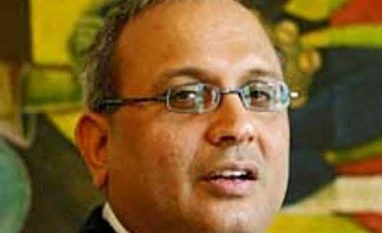 "Indian investors have been completely wrong in the past five years: Samir Arora")


 Connect with us on WhatsApp