Iron ore mines denial will crimp investment in steel
Kunal Bose In the halcyon years from 2005-06 to 2011-12, demand for Indian steel grew at an annual rate of 10 per cent and production at 7.8 per cent. The rise in demand was so strong that the country, instead of achieving the "strategic goal" of exporting "23 per cent of production", became net steel importer since 2007-08.
The good time for steel was due to annual gross domestic product (GDP) growth ranging from 8.59 per cent to 9.57 per cent, except in 2008-09 when as a result of the global financial crisis, it fell to 6.72 per cent. The economy's strong steel use intensity was principally derived from good performance of manufacturing and construction sectors.
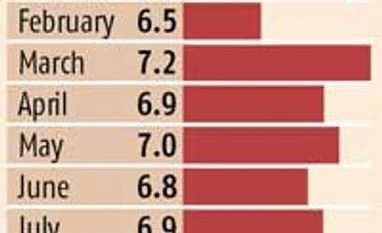
But all this is in the past. According to the Joint Plant Committee (JPC), in the first seven months of 2014-15, year-on-year steel demand growth was a small 0.5 per cent to 43.12 million tonnes (mt). What is particularly disturbing is a 1.3 per cent demand slide in October to 6.53 million tonnes.
The numbers are reflective of the "lingering effect of economic slowdown." Steel demand situation will also remain grave through 2015 in China. Metallurgical Industry Planning & Research Institute of China says steel consumption, in line with a slowing economy, will grow 2.5 per cent to 710 mt this year. Demand growth in the world's largest producer and user of steel will further recede to 1.4 per cent to 720 mt in 2015.
Slump in demand China and India stands as vindication of India Steel Association president Chandra Shekhar Verma's thesis that the metal use intensity of 1.1 to 1.2 vis a vis GDP holds good only when the economy grows beyond a certain level and focus steadfastly remains on infrastructure development. No wonder, at steel capacity of over 100 mt, its use here has remained at around 82 per cent, which though is better than world average of 78 per cent. Essar Steel vice chairman Firdose Vandrevala said at the recent Global Steel conference that even while it is unlikely that "Chinese boom years" would return again, growth in demand would lead to reduction in present world overcapacity of 360 mt to 180 mt by 2020. But the caveat is steel groups in China remain engaged in creating new capacity parallel to phasing out of uneconomic and polluting units. A question mark too remains on world demand growth. Euro zone is perilously close to deflation with growth stuck below one per cent. Japan continues to slide. Knock-on effects of Chinese slowdown on global economy are proving hard.
It remains a big question as to how much of the Indian 2025 targeted capacity of 300 mt will be achievable. Vandrevala says if the country remains committed to increasing the share of manufacturing in GDP to 25 per cent from the stagnating 15 per cent in stages and urbanisation and infrastructure development gains in pace, then steel demand could rise up to 255 mt by 2025. Projects in the pipeline, according to him, will lift our steel capacity to only 150 mt by 2018. That raises the grim prospect of our becoming sorely import dependent for the metal in the not too distant future. Vandrevala sounds the warning that we are already late in "meeting our 2020 steel requirements." If "Make in India" campaign is going to be based on imported steel then our "current account deficit will be $40 billion by 2025," he says. The problem is building a new steel mill in India takes nothing less than "10 years against five years in China" as investors have to contend with infrastructure deficit, logistical constraints and uncertainty about iron ore deposit allocation. No wonder ArcelorMittal has virtually beaten a retreat from India and Posco's Odisha venture remains good on paper ten years on.
Quoting from a McKinsey report, Vandrevala says in steel profit pool, share of the metal is 26 per cent, coking coal 32 per cent and iron ore 42 per cent. India has iron ore reserves of 30 billion tonnes. Like in Australia and Brazil, ore reserves here will rise substantially if exploration and prospecting are stepped up. The country's mining sector is in a state of flux. But in the crisis besetting the sector Vandrevala sees a "great opportunity to redraw the mining landscape." Investment in steel will dry up if mills are denied captive mines. Rise in India's import vulnerability will bring cheer to the surplus ridden Chinese steel industry, which must export more and more to compensate for tardy growth in domestic demand.

 "Iron ore mines denial will crimp investment in steel")


 Connect with us on WhatsApp