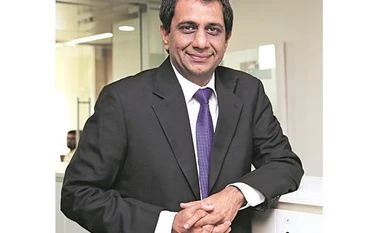
Stocks may look expensive after a sharp rebound from March lows, but the markets are at a fair level now, says Manish Gunwani, CIO-equity investments, Nippon India Mutual Fund. In an interview to Samie Modak, he says the value theme may pay off next year. Edited excerpts:
The benchmark indices are up more than 70 per cent from March lows. Do you think the markets have run ahead of fundamentals?
While there seems an optical disconnect between the markets and the economy, there are a few points to be kept in mind. First, both global and domestic economic recoveries have been far healthier than the worst-case scenarios drawn up a few months back. Second, the downturn in India’s corporate earnings cycle has been not from March but 5-6 years back. Thus, the base is low from a multi-year perspective. Third, global markets are positioned very positively for India because of immense liquidity combined with low oil prices. Finally, while the markets are trading on the aggregate level at high multiples, there are a lot of stocks which are below their levels two-three years back. Overall, we believe from a medium-to-long-term perspective, the markets are at a fair level now.
What’s the outlook for the next calendar year?
Globally, there seems to be a consensus about the next year of growth coming back, the dollar weakening, and the emerging markets and commodities doing well. Given that we are recovering from an extreme event, combined with good progress on the vaccine front, this view is likely to play out. On the domestic side, we have latent demand in many industries due to the slowdown of the last few years, multi-year low-interest rates, exports, and capital flow being assisted by the global macro scenario etc. So, the next year should be a case of earnings recovery and quite probably valuations might actually compress — this configuration should still give reasonable returns. We are already seeing that after a long period, earnings estimates are being revised upwards and a healthy sign is that these upgrades are spread across a lot of sectors.
Do you expect value stocks to gain traction?
Typically, when the economy changes direction materially either in a positive or negative direction, value or contra stocks do well. Given that both global and domestic growth is expected to be very different from the low base this year, it is likely that value stocks will outperform. Generally, the value-oriented sectors are energy, metals and corporate lending banks, apart from Covid-affected sectors like hotels, aviation, and retailing.
Which are your preferred sectors?
We like large private banks, telecom, commercial vehicle-related plays, and select plays in IT and pharma. Also, in the mid-cap space, many stocks are attractively priced in segments like cement, real estate, utilities, industrials, and auto ancillaries.
Do you expect money to move out of IT and pharma and go into sectors that haven’t done well?
In a cyclical recovery, it is possible that in the short term, healthy balance-sheet sectors like IT and pharma are less in favour against leveraged stocks, but we believe in both these sectors India has serious competitive advantages, especially with the emerging geopolitical scenario, and we continue to like select plays in these sectors.
MFs have big net-sellers this year, and more so in recent months. What are the reasons?
It is primarily a function of the flows into the industry; in the past three-four months, there has been outflow from the industry, which has led to the selling.
Do you think MF/investors have lost out on the latest gains?
It is difficult to make a general statement as a lot depends on each individual’s asset allocation. Also, the industry had inflows in March and April — so that was a good opportunity that was availed. Generally, we feel it is best not to try and time the markets and having a disciplined asset allocation is important. A lot of discussions tend to happen on which opportunities were missed in a few months or a year, but the more important issue is that equities tend to deliver healthy returns in the long term and under-allocation can lead to big absolute amount loss.
What are the near-term risks?
The first is from the health side — if the second wave accelerates or there is any issue related to vaccine rollout. The second is that global interest rates are likely to go up as growth recovers and if the liquidity tightens, it may hinder growth. Any big upmove in the crude price is always a risk for India. There are a couple of structural issues that can impact the Indian economy. First is that global trade-to-GDP is falling which reduces the opportunity to use exports as a lever for rapid growth. Second, remittances which is a big part of India’s economy seem to be stagnating.