JSW Steel: Good show in Q1
But macro concerns remain
Ujjval Jauhari Mumbai JSW Steel's consolidated results, the first after the amalgamation with JSW Ispat, impressed the Street due to a better-than-expected operational performance. The stock that had hit a 52-week low of Rs 515 in early morning trade and gained sharply to close at Rs 565.4, six per cent up compared to Tuesday's close. Though the bottom line (loss of Rs 382 crore versus profit of Rs 50 crore a year ago) was impacted by translational losses (Rs 862 crore) due to rupee depreciation, at the operational level, the EBIT (earnings before interest and tax) a tonne of $85 was better than $34-45 reported by other Asian peers in the June quarter. Tata Steel and SAIL are yet to report their numbers. Ebitda margins at 18.3 per cent were better than 17.5 per cent in the March quarter, though lower than 19.3 per cent a year ago.
While the company has reported a good performance, looking at the slowdown, the stock can continue the roller coaster ride in the near term. Giriraj Daga at Nirmal Bang says the company is better placed, but maintains his negative stance on the sector. An analyst at Angel Broking maintains a 'neutral' stand. With seven 'buy', four 'hold' and five 'sell' ratings (by Bloomberg) in July and a one-year consensus target price of Rs 718, investors with a long-term appetite may accumulate.
After merger, the capacity has reached 14.3 million tonnes (mt), taking it to number one spot in terms of capacity.
During the June quarter, it produced 2.86 mt, a growth of 34 per cent year-on-year, while sales volumes at 2.55 mt grew 21 per cent, impressive looking at the mere 0.3 per cent growth in domestic consumption during the quarter. For FY14, the company has forecast for 12 mt output and 11.5 mt sales volume.
The 10 mt per annum capacities at Karnataka operated at 83 per cent capacity utilisation in the quarter. The iron-ore availability has improved slightly, with 10 category A and two category B mines reaching six mt a year capacities. NMDC has upped its ore production to nine mt a year. However, more ore is required, given the demand of 30 mt. For better operational efficiencies at Vijaynagar, the company has commissioned a 0.6-mt palletisation plant, waste-heat recovery system and a fourth stove at blast furnaces three and four, respectively.
The challenge is at the JSW Ispat Dolvi facility in Maharashtra. For this four mt a year plant, the railway sidings have been completed in the quarter, but the palletisation plant and coke oven batteries are to be commissioned by December. Seshagiri Rao, joint MD and group CFO of JSW Steel, says the facility should turn profitable by January.
While the rupee fall has negated major gains from lower raw material costs, the blended coal costs at $175 a tonne during the quarter was lower than $180 in the March quarter. Vinod Noval, deputy MD, JSW Steel, feels that for the September quarter the costs should decline to $170 a tonne.
The rupee fall is good for steel realisations that are import-parity based, but it also hurts its bottom line, given the translational losses due to dollar-denominated liabilities.

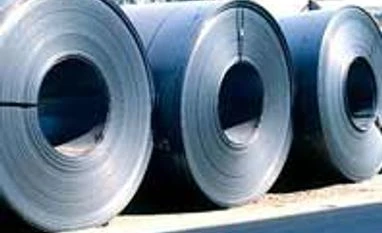 "JSW Steel: Good show in Q1")


 Connect with us on WhatsApp