Modi effect bails out 100 penny stocks
Rise in m-cap to above Rs 10 cr could help companies avoid illiquid tag, though analysts advise caution on investing in such scrips on present mood alone
Sneha Padiyath Mumbai The bull run and revival in trading interest could see shares of hundreds of companies shed the ‘illiquid’ tag. The ongoing rally, now more broad-based, has seen the market capitalisation of about 100 companies increase to above Rs 10 crore, an important threshold for identifying illiquid stocks. A company is excluded from the so-called 'periodic call auction mechanism' if its market capitalisation is more than Rs 10 crore.
Introduced last year, the periodic call auction is a trading mechanism devised by the Securities and Exchange Board of India (Sebi) for illiquid stocks. The system is put in place to curb price manipulation in penny stocks, though market players have expressed difficulties in trading under it. Also, interest is seen dipping in stocks traded this way.
| EVADING ILLIQUID TAG |
- In 2014, market cap of 107 stocks crosses Rs 10 crore, a criterion used to identify illiquid stocks
- These companies can now escape inclusion in the ‘periodic call auction’ mechanism
- The system was introduced last year to improve participation in select illiquid stocks
- Analysts concerned sharp movements in some of these stocks not backed by fundamentals
- Advise caution against high retail participation
|
However, the current rally could ensure a lot of companies escape the call auction net and instead trade in the normal category. Under call auction, trading is conducted on an hourly basis, wherein the first 45 minutes are for order entry and modification and the next 15 minutes for order matching and trading confirmation. This is in contrast to the normal market trading, where order-matching and execution take place on a real-time basis during market hours.
According to a Business Standard analysis, 107 companies have seen their market cap go up by two and four times so far in 2014. Previously, they had valuations of less than Rs 10 crore each and, hence, were vulnerable to being included in call auction trading or were already tagged as illiquid.
“After large-caps, the mid-cap and small-cap stocks have started rallying. These stocks could continue to rally as long as the market remains in bull territory,” said U R Bhat, managing director, Dalton Capital.
Market players said the current rally might pull a lot of stocks out of the illiquid counter to normal trading. However, they advised caution, as it could also mean an increase in speculative activity. “Low liquidity often drives operators to these counters. As a result, the activity seen in these is due to speculation and not backed by fundamentals,” said Alex Mathew, head of research, Geojit BNP Paribas Financial Services. “A lot of retail investors get attracted, as they look cheap on an absolute basis. However, that absolute price cannot be a metric for an investment decision.”
Stock exchanges and Sebi have trading volume and financial performance-based criteria for identifying illiquid stocks. By the new rules, if a company has an average daily trading turnover of less than Rs 2 lakh, it is moved to call auction trading. However, if its market cap is more than Rs 10 crore or if it has paid a dividend or has been profitable in two of the past three years, and has less than 20 per cent promoter shares pledged, it can be excluded.
Small companies have begin to outperform large companies. However, most of this is not backed by fundamentals, said analysts.
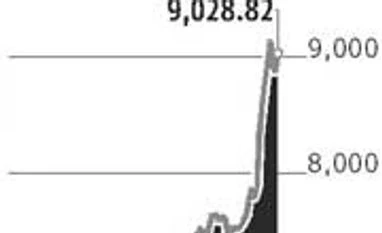
The benchmark indices —BSE Sensex and NSE Nifty —have gained about 16 per cent so far in 2014. Meanwhile, the BSE mid-cap index has gained nearly 26.2 per cent, while the BSE small-cap index has risen 37.8 per cent during this period.

 "Modi effect bails out 100 penny stocks")


 Connect with us on WhatsApp