In its first bi-monthly monetary policy review of 2018-19, the Reserve Bank of India’s (RBI’s) six-member monetary policy committee (MPC), headed by Governor Urjit Patel, on Thursday kept unchanged the key repo rate at 6 per cent and cash reserve ratio at 4 per cent.
The decision of the MPC is consistent with the neutral stance of monetary policy in consonance with the objective of achieving the medium-term target for consumer price index (CPI) inflation of 4% within a band of +/- 2%, while supporting growth.
The RBI has maintained the status-quo on the key short-term borrowing rate (repo) in its last three policy meets. The benchmark lending rate was reduced by 0.25 percentage points to 6 per cent last August, bringing it to a 6-year low.
The six-member committee met against the backdrop of the government's assertion that both the fiscal deficit and the revenue shortfall in 2017-18 would be lower than the upwardly revised estimates given in the Union Budget.
According to Motilal Oswal, Chairman & MD, Motilal Oswal Financial Services,"As expected MPC left all key rates unchanged as it was imperative in the global scenario to hold rates. We are at a reasonably good base rate and financial sector is now passing on the benefits of lower rates slowly, in the economy."
"We think 10,000 on Nifty50 and 33,000 on S&P BSE Sensex are good levels to invest in the equity markets from the long-term perspective. We will witness some turbulence, thanks to global trade fight, but subject to that volatility, these are good levels for retail investors to commit some money," he added.
Top takeaways from the RBI policy:
Repo rate unchnaged
The monetary policy committee left interest rates unchanged at its first meeting of the new financial year. The MPC has also maintained a neutral stance on monetary policy.
Following the MPC’s review, the benchmark repo rate remains unchanged at 6%. The reverse repo rate has been retained at 5.75%. The decision was taken by a vote of 5-1 with Michael Patra voting for a 25 basis point hike in rates. The decision was in line with market expectations. All of the 15 economists polled by Business Standard forecast a status quo on rates.
Inflation forecast lowered
Consumer price inflation in February came in lower than expected at 4.4%. For the March quarter, inflation is expected to be below the RBI’s 5.1% estimate for average inflation. For 2018-19, the MPC has reduced its inflation forecast marginally. It now expects CPI inflation in the first half of the year at 4.7-5.1%, and inflation in the second half of the year is seen at 4.4%.
The RBI said house rent allowance (HRA) had a bearing on inflation. Excluding the estimated impact of an increase in HRA for central government employees under the 7th central pay commission.
Excluding the impact of house rent allowance revisions, CPI inflation is projected at 4.4-4.7% in the first half of 2018-19 and 4.4% in the second half, said the MPC.
However, continued to caution on upside risks emerging from several factors including strengthening aggregate demand, fiscal slippage and global crude oil prices.
Growth Seen Strengthening
Economic activity is expected to accelerate with strengthening of investment activity, supported by consumption demand and robust credit growth. Aggregate demand expected to improve supported by GST implementation, recapitalisation of banks, resolution of distressed assets.
GDP growth is projected to strengthen from 6.6% in 2017-18 to 7.4% in 2018-19 – in the range of 7.3-7.4% in H1 and 7.3-7.6% in H2.
The MPC also notes that growth has been recovering and the output gap is closing. This is also reflected in a pick-up in credit offtake in recent months. The large mobilisation of resources from the primary capital market should support investment activity further. While the domestic cyclical recovery is underway, the long-term growth potential is also expected to be reinforced by various structural reforms introduced in the recent past.
Monsoon Forecast
According to the central bank, monsoon is expected to be "normal" in 2018. Weather agency, Skymet also projected a normal monsoon, indicating good agriculture output and less pressure on prices.
RBI added that should the monsoon turn deficient temporally and/or spatially, it may have a significant bearing on food inflation.
Key Risks
The MPC notes that the deterioration in public finances risks crowding out private financing and investment. Furthermore, even as global growth and trade have been strengthening, rising trade protectionism and financial market volatility could derail the ongoing global recovery.
"In this unsettling global environment, it is especially important that domestic macroeconomic fundamentals are strengthened, deleveraging of distressed corporates and rebuilding of bank balance sheets persisted with, and the risk-sharing markets deepened," RBI said in the statement.

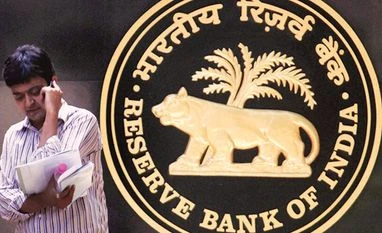 "MPC starts FY19 with status quo on rates: Top takeaways of policy decision")












 Connect with us on WhatsApp