NCDEX volumes slide as Sebi puts a stop to new contracts
Daily volumes fell 38% from a year ago to Rs 3,243 cr in December 2015, ahead castor seed suspension; with chana taken off last week, they've fallen further
Dilip Kumar Jha Mumbai The agricultural-centric National Commodity & Derivatives Exchange (NCDEX) has lost sizable volume in the past six months.
Average daily volumes were Rs 5,230 crore a year before and had fallen to Rs 3,243 crore in December 2015, a month ahead of the suspension of trade in castor seed derivatives. And, since the suspension of chana (chickpea) futures last week, the average volume has fallen further .
The Securities and Exchange Board of India (Sebi) has told all commodity derivatives exchanges not to launch new contracts till further orders; it has also barred participants from taking any new positions. Only squaring (trade settlement) of positions will be allowed, a Sebi circular said.
“It will certainly have a direct impact on the overall volume of agri futures. Both volume and turnover would decline,” said B K Sabharwal, past president of the Commodity Participation Association of India (CPAI).
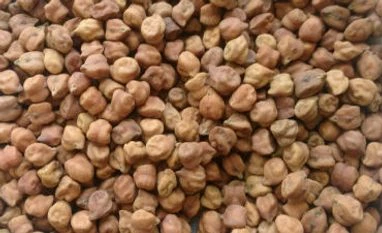
The share of chana contracts on NCDEX has been declining since its prices in the physical markets started moving up. In September 2015, for example, these contributed 23.1 per cent in value and 23.2 per cent in volume terms to the NCDEX turnover. By January, these had slid to the lowest in recent memory, to 3.4 per cent by value and 3.3 per cent by volume. The contribution started moving up with the ban on castor seed in January, to around 14.7 per cent in both value terms.
By value, however, chana contracts’ contribution in May had declined to 6.1 per cent and nearly five per cent, by value and volume, respectively.
“More than the actual decline in figures, the shattering of market sentiment would drive down overall turnover and volume in agri derivatives,” said Sabharwal.
How is the exchange planning to respond to falling volumes? An NCDEX spokesperson said, “The exchange has significantly strengthened the risk management and surveillance framework and will have more stringent Know Your Customer (KYC) processes for clients and members. We are also looking at adopting best practices from other exchanges and the Sebi model bylaws on surveillance, to ensure a more robust market platform. Following the RBI directive, the Exchange has also intensified its outreach with agribusiness and banks, educating them about the benefits of hedging and has introduced tools like the 'Hedge Passport' to enable the same.”
Meanwhile, in the physical markets, chana is trading at a premium over futures prices.
“The fundamentals have supported the price rise. There is a huge supply shortage of pulses in India. Traders are forecasting prices at Rs 7,500–7,800 a quintal because of the lack of supply for the next four–five months,” said Ajay Kedia, Director, Kedia Commodity.

 "NCDEX volumes slide as Sebi puts a stop to new contracts")


 Connect with us on WhatsApp