Interest in equity mutual funds will return: Milind Barve
Interview with MD, HDFC Mutual Fund & Chairman of Amfi
Chandan Kishore Kant Mumbai At a time when the top five players control more than half the market share in the mutual fund sector, smaller fund houses are finding the going tough.
Milind Barve, who heads the country's largest fund house, HDFC Mutual Fund, and is also the chairman of the Association of Mutual Funds in India (Amfi), tells Chandan Kishore Kant the industry's primary objective must be to provide consistent above-average returns to investors. Edited excerpts:
It's been over a year now since HDFC MF became India's largest fund house. Are you under pressure to sustain the top position at a time your closest competitor is inching up fast? We are not under any pressure. We didn’t do anything very different or special to become No 1. We continued to do what we were doing when we were at No. 2 or 3 — focusing on investment performance and promoting distribution by SIPs (systematic investment plans). I do believe, though, we must look at the competition to learn from what they are doing better. Having said that, we are happy being No. 1 and the credit goes to my team, many of whom have been a part of this journey since day one. We think the size is a very strong indicator of how an asset management company should be, but it’s not the only one. We want to grow the right way.
Are n’t India's mutual fund players facing tight competition in the race for assets? You cannot run a business all the time looking over your shoulders. And, I think our industry suffers excessively from that. There is too much of becoming No. 1, 2 or 3. For instance, a bank is not stressed about whether their disbursement or deposit growth will be at No. 1, 2 or 3. They pursue their business plans according to what they think is right. Our sector is unnecessarily too competitive.
Who is to blame, then? I think the industry itself has to be blamed. Partly to the fact that the people who own and run these businesses give too much credence on size, which is not the only indicator of a well-run business. If one goes only after size, people will cut corners.
Amid this, what's important for you — size or profit? From the business point of view, one needs to grow and make reasonable profits, too. Actually, building size and profits are not opposite. Profits come from economies of scale. The key is that, at the end of the day, we are an investment management company and our primary objective must be to provide consistent above-average returns in the asset class chosen by the investor.
My learning is that when a fund house does that across asset classes and across market cycles, you win the trust of your investors, irrespective whether the fund house is No 1 or 2. Investors should feel the fund house will not let you down.
What would you say on small MFs’ complaint that regulations often benefit larger players? In the new Sebi (Securities and Exchange Board of India) regulation, I cannot find a single word which is meant to benefit the larger fund houses and not the smaller ones. If a small fund house does not have many branches beyond the top 15 cities, then they would definitely not benefit. Sebi has evolved a very innovative way of making distribution into smaller towns very attractive without significantly adding to costs.
But the sector is getting consolidated among the top players... It's the investors who have consolidated the sector. Yes, larger fund houses do have deeper pockets, which enable them to withstand challenging market cycles. If you ask me whether it would be easy for them (small houses) to break out and suddenly grow at 30-40 per cent, I would say it might be difficult. But larger fund houses have their own challenges of having a larger cost base.
The previous year was one of the worst for equity schemes. How do you see this segment doing in the coming times? Whether the equity business will grow or not will depend on investors' perception of the market behaviour and not that of the scheme. Perception is that equity mutual funds are facing redemptions and therefore not doing well. Mutual funds are a derivative of the market. We reflect what investors think about the market. So, if they have a positive view about the market, they will buy equity mutual funds. And, if they feel that they will make more stable risk-adjusted returns in fixed income, they will be in debt mutual funds. The choice of asset class lies with the investors. Our job as a fund house or as an industry is to manage the money in that asset class proficiently. We think interest in equity mutual funds will return; it's only a matter of time. But as an industry, we cannot dictate investors’ preferences.
What went wrong with RGESS? The approach of new customers only through new DP accounts, annual income of Rs 10 lakh, investment up to Rs 50,000, once in a life time tax exemption (which is now made for three years); may have been very stringent. As an industry, we had asked for investment products with tax benefit on long-term savings, retirement plans, etc and no differentiation between who is the manufacturer of these products.

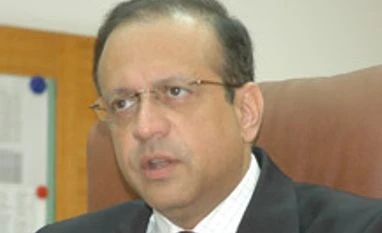 "Interest in equity mutual funds will return: Milind Barve")


 Connect with us on WhatsApp