Outlook is neither bleak nor promising: Anoop Bhaskar
Interview with Head of equities, UTI Mutual Fund
Jinsy Mathew Mumbai Anoop Bhaskar, head of equities at UTI Mutual Fund, feels the outlook for the Indian market is neither bleak nor promising. In a conversation with
Jinsy Mathew, he estimates the pace of economic recovery could be more "flattish" than what some investors are hoping for. Edited excerpts
Where do you see the Indian markets heading? Even though fundamentally only marginal improvements are visible, the markets are still trading close to all-time highs. This is mainly because India has been a beneficiary of a global shift in asset allocation - equity is the asset class where incremental money is being invested rather than fixed income.
In India, this move has got accentuated since August 2012 on the belief that the government is trying to make good for the last three years' inaction, which had its own adverse impact. Also, there has been a widespread belief that the Reserve Bank of India will cut interest rates. Presently, the market is neither cheap nor expensive, with the outlook not very bleak but not promising either.
Do you foresee a case of money re-routing from India to other performing markets if there is a lack of initiatives from the Indian government? This situation is very unlikely. The reason being, if not India, which are the other options in the emerging markets' basket? Perhaps China is the only emerging market which has not yet touched its 2007 peak. All other Asian countries are either facing commodity cycle headwinds or some political issue. So, by default, there are not many options of size available.
Foreign institutional investors (FIIs) are of the view that inflation in India is going to come down. Interest rates are also expected to come down. Also, India is likely to be at the bottom of the economic cycle. In the worst-case scenario, even if the FIIs were to be wrong on India, it's not a massive risk for them. The reason being, in a global equity fund of $30 billion, may be $300 million is the only exposure to India. It can always exit and be re-routed to another emerging market.
Does the pace of rupee depreciation worry you? Though India had record FII inflows, it hardly had any corresponding impact on the rupee. This means our external trade numbers are much worse than what we are projecting. The central bank spent around Rs 5 billion between the 44-50 levels. Hence, to inject more liquidity into the system in the near future, the central bank is selling dollars so that they can buy them later to stabilise the rupee, just in case our currency depreciates further from the current levels. Turn to TSI, Page 6 >
Is the worst behind us in terms of macros? There is no consensus that we are going to see a 'V'-shaped recovery. In terms of GDP (gross domestic product), I think we will be no better than the previous year due to lack of investments as general elections are just round the corner. Thus, the recovery could be more "flattish" than what some investors are hoping for. A longer term problem is to manage the current account deficit - either through boosting exports, or limiting the growth of imports or both!
Is there any sector which you avoid? Aviation and businesses which require continuous raising of equity are best avoided in the current scenario. The thumb rule we follow is in any growing business, by the third year they should generate free cash flow from operations. The reasoning is somewhere at some point in time growth has to deliver cash.
So, which are the pockets you are positive on? I am positive on interest rate sectors especially private sector banks. Cement, telecom and consumer goods are some of the other pockets which offer value.

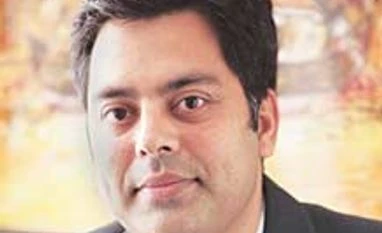 "Outlook is neither bleak nor promising: Anoop Bhaskar")


 Connect with us on WhatsApp