Potato prices spurt as bad weather threatens output
In Amritsar mandis, average price was Rs 1,000 a quintal on Tuesday from Rs 800 a quintal last Saturday
Dilip Kumar Jha Mumbai The price of potato has jumped 25 per cent in the past four days, due to reports of massive damage of the harvested crop from inclement weather.
“There has been intermittent rainfall, followed by hailstorms and rapid increase in temperature, which reduced supplies to mandis and damaged the harvested output,” said R P Gupta, director, National Horticulture Research & Development Federation.
In the Amritsar mandis, the average price was Rs 1,000 a quintal on Tuesday from Rs 800 a qtl last Saturday. In Rajkot, the price has jumped 17 per cent in four days, to trade at Rs 1,550 a qtl. In the Delhi mandi, potato arrivals fell to 12,547 qtls on Wednesday, as compared to 15405 qtls four days earlier; in Kolkata, to 2,160 qtls from 2,700 qtls earlier.
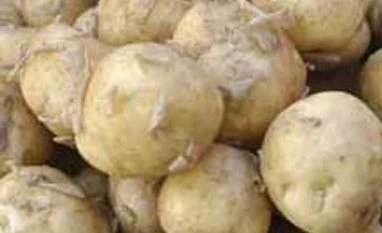
Arrivals in major mandis across the country have fallen 25-30 per cent. Most of the unharvested crop in the field is damaged through excess soil moisture; by the time the mud dries, it leaves dark spots, which also reduces shelf life.
The quantity hitting the mandis is being bought largely by bulk consumers, who first store it in a closed environment, to reduce moisture. Spreading in the open air for a short period before dispatch to cold storages also helps segregate good quality from the spoilt one. “There has been at least 30 per cent reduction in storage this year. Last year by this time, bulk consumers had filled their storages; only 65-70 per cent of storage is full this year,” said Gupta.
India produced 44.7 million tonnes from 1.96 mn hectares in 2012-13. This year, output is expected to be 15-20 per cent lower.
“The government is aware of the lower crop estimates. Therefore, it should encourage sowing of kharif potato to reduce the shortage and the fear of unprecedented price escalation,” said a senior official of the Central Potato Research Organisation.
In India, potato is sown in both kharif and rabi seasons. Available between August and October, the kharif produce accounts for 15-20 per cent of annual output.
The other 80-85 per cent comes into the market between mid-December and mid-Apri, considered rabi produce. The rabi potato is stored till November and made available for domestic and export markets.

 "Potato prices spurt as bad weather threatens output")


 Connect with us on WhatsApp