
PSUs might not meet public float deadline: Sebi chief
Ajay Tyagi dwells on the NSE controversy, P-notes, LTCG evasion in a press conference
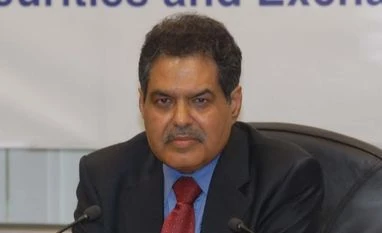 "PSUs might not meet public float deadline: Sebi chief")
premium
Explore Business Standard
Ajay Tyagi dwells on the NSE controversy, P-notes, LTCG evasion in a press conference
Ajay Tyagi, chairman, Securities and Exchange Board of India, to journalists on a number of issues the body is currently dealing with. Edited excerpts from a press conference, compiled by Samie Modak:
On P-note tightening:
The tightening is to ensure Indians and non-resident Indians don't use that route for investing here. The idea is not to stop it altogether, as we understand the importance of the route. It is a framework that enables investors to first test the Indian market, without registering. But, for overseas investors wanting to come to India, the right way is to register here, so that there is no opaqueness as to who the end-beneficiary is. We are having regular meetings with the Supreme Court-appointed Special Investigation Team (SIT) on black (undisclosed) money and keeping them in the loop.
On definition of hedging (answered by G Mahalingam, wholetime member, Sebi):
We are talking about one-to-one hedging. So, if I have taken a position in the underlying cash market, hedging would constitute a derivative in only that particular scrip. We don't want a broader definition, as the idea is not to use derivatives for speculative purposes but for purely hedging purposes. That is the reason the definition is kept restrictive. A monitoring mechanism for the same will be put in place but we are yet to take a call as to it being done by whom.
On 25 per cent public float deadline for public sector units:
There is a proposal from the (central government's) department of investment and public asset management that the August 2017 deadline will be too close (for all PSUs to bring down government holding to a maximum of 75 per cent). They have brought up some arguments. However, extension of the deadline can't be done at Sebi's level. The issue has been referred to the finance ministry, who will take a view on that. The deadline is not in abeyance. The ministry needs to take a view on this.
On the National Stock Exchange controversy:
We have issued showcause notices to NSE and 14 of its key managerial personnel. We have received their reply, which is under examination. We have also started to look into the issue of connivance between NSE employees and brokers. We are in the process of engaging forensic auditors to help the investigation team. That process is on. Deloitte (consultants, which probed)) didn't go in depth into the connivance issue. Their audit was more on an illustrative basis. So, it needs to also be gone through comprehensively at the brokers' end.
It's too early to comment if the NSE issue can be settled through the consent mechanism. We have to examine the replies to the notices and only then can take a view.
On rating agencies:
The delay in rating action (as with Reliance Communications) is a matter of concern. We are working on a paper there, too. There is a quick need for review of the regulatory framework for credit rating agencies and debenture trustees. We will come out with the discussion paper in the near future. This is an area of concern for us.
Sebi action on auditors:
In the case of Satyam, the Bombay High Court has cleared Sebi's oversight on auditors. In the case of listed companies, Sebi is in charge of all regulatory aspects. Theoretically, in listed companies, if an audit isn't done properly and as investor confidence is dependent on it, as I understand, Sebi can pass any directions to the auditors.
On reviewing of derivatives framework:
We want to obtain views on the Indian market and compare it to how thisis done globally. There are issues like product suitability of equity derivatives. There are questions like who is investing right now and what purpose it gets served. The ratio of derivatives turnover compared to cash market turnover in India is very high among its peers. It is obvious that retail (individual) investors are not fully aware of risk investments in various derivatives products. Sebi doesn't plan to propose any changes; we want to get market views first and then take a call on intervention.
Long-term capital gains tax evasion:
There are around 145 cases of LTCG evasion. Investigation is over in 85 cases and the reports have been shared with the Central Board of Direct Taxes (CBDT). Our view is that where there is market manipulation, we should take action. If there is only tax avoidance and no market manipulation, those cases have to be brought to the notice of CBDT. We plan to complete the investigation in the remaining cases by the end of September.
Already subscribed? Log in
Subscribe to read the full story →

3 Months
₹300/Month
1 Year
₹225/Month
2 Years
₹162/Month
Renews automatically, cancel anytime

Over 30 premium stories daily, handpicked by our editors


News, Games, Cooking, Audio, Wirecutter & The Athletic
Digital replica of our daily newspaper — with options to read, save, and share


Insights on markets, finance, politics, tech, and more delivered to your inbox
In-depth market analysis & insights with access to The Smart Investor


Repository of articles and publications dating back to 1997
Uninterrupted reading experience with no advertisements


Access Business Standard across devices — mobile, tablet, or PC, via web or app
First Published: Jun 21 2017 | 11:56 PM IST

