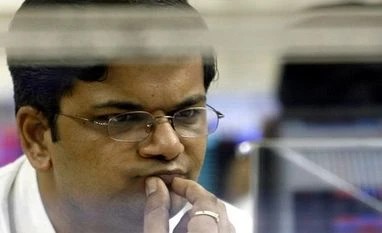
Sensex ends 793 pts lower: 3 biggest factors that dragged the market lower

Here's a look at the biggest factors that dragged the market lower on Monday -

markets
markets
Swati Verma New Delhi
4 min read Last Updated : Jul 08 2019 | 4:15 PM IST
Indian stock market witnessed a sharp correction on Monday with the benchmark indices – S&P BSE Sensex and Nifty50 tumbling over 2 per cent each. The indices saw their biggest one-day fall in four years amid across-the-board sell-off. 

The fall comes on the back of a number of proposals in Budget 2019 announced last week, such as increase in minimum public shareholding, 20 per cent tax on share buybacks and steep increase in tax of ultra-rich segment. 

Besides, weak global cues, too, dented sentiment and nudged investors to press panic button and rush to safe havens.

The S&P BSE Sensex plunged as much as 908 points or 2.29 per cent to hit a low of 38,605 in intra-day trade before ending at 38,721, down 793 points or 2 per cent. The 50-share Nifty slipped 253 points, or 2.14 per cent, to settle at 11,559. The index had slipped as much as 288 points, or 2.43 per cent, during the session. 

“The market fall today was on account of concerns over future fund flow into the secondary market and scam revelation at Punjab National Bank (PNB). Hike in surcharge in the Budget will have an adverse impact on high-end consumption, as well as reduce the investible surplus of high-income individuals, whose money was the mainstay of mutual funds, PMSes and the midcap segment,” said Amar Ambani, president and head of research at YES Securities.

Volatility index, India VIX, rallied over 7 per cent to 14. The two-day slide that began on Friday last week has washed away Rs 4.95 trillion in market-capitalisation (market-cap). 

Here's a look at the biggest factors that dragged the market lower on Monday:

PROPOSAL TO REDUCE PROMOTER SHAREHOLDING

Among the many negatives that weighed on investor sentiment, the biggest was the proposal to increase the minimum public shareholding limit to 35 per cent, thereby reducing the promoter holding to 65 per cent in the listed companies. Currently, there are around 1,174 listed companies where promoter shareholding is above 65 per cent. This means the total quantum of sale that needs to be done by these companies is estimated to be around whopping amount of Rs 3,87,000 crore, says research by Centrum Broking. READ MORE HERE 

With the clear evidence of low-risk appetite amid huge wealth destruction, analysts say, investors are likely to be on the defensive and hence, stay away from the offerings by these companies. 

HIGHER TAXATION FOR FPIs

The government's proposal to raise the tax burden on the ultra-rich could also affect about 2,000 foreign funds that are legally equivalent to associations of persons (AOP), a class of income earners required to pay more taxes after new liability slabs were created in the federal budget, said a report by The Economic Times. 

Giving the reference of LTCG tax, which created more issue for the market than creating a tax for the government, Ambareesh Baliga, independent market expert says: "Extra taxes imposed by the government may not serve the purpose but on the contrary will spoil the market mood and destroy the wealth. Wealth destruction also means no capital formation and if there is no capital formation, it will be detrimental for the overall economy." 

GLOBAL FACTORS

Morgan Stanley cut its global equities allocation to the lowest in five years, and downgraded its investment recommendation to underweight, saying the outlook for stocks over the next three months looks particularly poor. "We see a market too sanguine about what lower bond yields may be suggesting – a worsening growth outlook,” they wrote. “Continued deterioration in global PMIs suggests a macro environment with plenty of downside risks," Bloomberg reported quoting the brokerage firm, as saying.  READ MORE ON IT HERE

One subscription. Two world-class reads.

Already subscribed? Log in

Subscribe to read the full story →
*Subscribe to Business Standard digital and get complimentary access to The New York Times

Smart Quarterly

₹900

3 Months

₹300/Month

SAVE 25%

Smart Essential

₹2,700

1 Year

₹225/Month

SAVE 46%
*Complimentary New York Times access for the 2nd year will be given after 12 months

Super Saver

₹3,900

2 Years

₹162/Month

Subscribe

Renews automatically, cancel anytime

Here’s what’s included in our digital subscription plans

Exclusive premium stories online

  • Over 30 premium stories daily, handpicked by our editors

Complimentary Access to The New York Times

  • News, Games, Cooking, Audio, Wirecutter & The Athletic

Business Standard Epaper

  • Digital replica of our daily newspaper — with options to read, save, and share

Curated Newsletters

  • Insights on markets, finance, politics, tech, and more delivered to your inbox

Market Analysis & Investment Insights

  • In-depth market analysis & insights with access to The Smart Investor

Archives

  • Repository of articles and publications dating back to 1997

Ad-free Reading

  • Uninterrupted reading experience with no advertisements

Seamless Access Across All Devices

  • Access Business Standard across devices — mobile, tablet, or PC, via web or app

Topics :Indian marketsNifty indexS&P BSE Sensex

Next Story