Short-term funds are preferable
Declining global commodity and crude oil prices have helped bring down imported inflation significantly and there are no signs of the commodity cycle upturn
Amandeep Chopra A little over a year ago, RBI began cutting rates and then went into a pause as it saw the risk emanating from a high inflation, deteriorating current account deficit (CAD) and political uncertainty, in spite of a slowing economy. While these risks began gradually getting addressed, RBI in its bid to help kickstart growth renewed the rate cutting cycle in January 2013. A rate cut helps bring down the general interest rate levels, lower borrowing costs for banks, which can in turn pass on the benefits to borrowers. While WPI has moderated from over eight per cent levels last year to a low of 4.9 per cent in April 2013, the consumer price index (CPI) too is showing signs of moderation coming off from over 10 per cent levels to 9.4 per cent for April 2013.
Going forward, food inflation is expected to ease further with the winter crop hitting the markets and expectations of a normal monsoon. Declining global commodity and crude oil prices have helped bring down "imported" inflation significantly and currently there are no signs of the commodity cycle upturn. Slowdown in major emerging markets, including the BRIC nations, will keep commodity demand soft. For FY14, RBI projects inflation to be at an average of 5.5 per cent.
While we do see initial signs of growth bottoming out, we are still a few quarters away from a meaningful recovery. With impetus on investments and some demand recovery, growth could pick up in the second half.
In this backdrop, we continue to expect interest rates to decline. However, as we still remain in a period of uncertainty, with evolving macro trends on the global front, the rate cuts are expected to be asymmetrical. They will be driven primarily by three key factors - growth continuing to be below RBI expectations, further softening of inflation and evolving trends in the twin deficits. Considering these, the decline in interest rates might not be linear across maturities and asset classes, making it a fairly challenging environment.
We share a fair degree of concern on the CAD and its impact on rupee as it can negate the benefits of a soft commodity cycle and influence the portfolio flows. Furthermore, as India has been a beneficiary of the global liquidity, an improving US economy and the US Federal Bank's reversal of its policy stance could affect our rate outlook. It would be difficult for RBI to follow a rate cut cycle in this backdrop and might need to recalibrate its policies.
The market in the near term is expecting a rate cut of 25 basis points in the June policy and potentially a cash reserve ratio (CRR) cut as well given the liquidity in the system is outside the comfort zone of RBI. During the week ended May 24, 2013, banks have borrowed an average daily amount of Rs 96,000 crores from the RBI under the LAF repo auctions. We feel RBI would take some action towards addressing that liquidity deficit, more likely by way of open market operations especially as the advance tax period is a fortnight away.
With expectations of further rate cuts and the current macroeconomic environment, duration funds are expected to outperform other fixed income categories. We continue to suggest a mix of short-term and long-term funds over a medium-term investment horizon, with a higher weightage to the short-term funds given the volatility expected in the next few months. In ultra-short term category, we continue to recommend floating-rate funds to our investors. Short-term Income funds look attractive on a time horizon of 6-9 months.
The author is Group President & Head, Fixed Income, UTI AMC

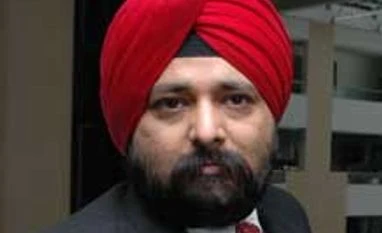 "Short-term funds are preferable")


 Connect with us on WhatsApp