Home / Markets / News / Tyre stocks on a roll; Apollo Tyres hits record high, Ceat 52-week high
Tyre stocks on a roll; Apollo Tyres hits record high, Ceat 52-week high
The raw material (RM) and other input costs have started softening after a long spell of unprecedented increase, which is likely to improve margins in the medium term for tyre companies
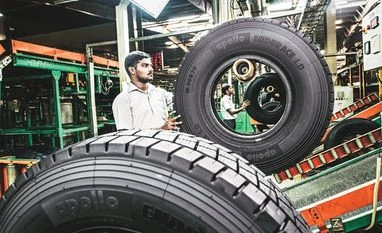
Shares of tyre companies were in focus on Monday with Apollo Tyres, Ceat, and JK Tyres surging up to 9 per cent in the intra-day trade amid heavy volumes. The rally comes amid hopes of margin improvement going forward. Of these, Apollo Tyres surged 6 per cent and hit a record high of Rs 312.35, while Ceat gained 5 per cent and touched a fresh 52-week high.
JK Tyres, meanwhile, surged 9 per cent to Rs 187.65 on the back of nearly four-fold jump in trading volumes. A combined 7.39 million equity shares, representing 3 per cent of total equity of the company, had changed hands on the NSE and BSE till 12:40 PM. The stock was trading close to its 52-week high level of Rs 197.50, touched on September 16. In comparison, the S&P BSE Sensex was up 0.50 per cent at 62,604.
The raw material (RM) and other input costs have started softening after a long spell of unprecedented increase, which is likely to improve margins in the medium-term for tyre companies. Rubber and crude oil-related inputs, together, account for over 60 per cent of the raw material cost as a percentage of sales.
Moreover, higher volumes from automotive makers (especially the original equipment manufacturer segment) and steady replacement demand are key drivers on the top-line front. READ MORE
In the past three months, the stock price of Apollo Tyres has soared 27 per cent, as against 6 per cent rise in the Sensex. The company remains optimistic about the demand outlook over the medium to long term, specially in the passenger vehicle (PV) space in European region.
The management commentary on the demand outlook remains healthy amid strong PV demand and ongoing CV cyclical upswing, with Ebida (earnings before interst, tax, depreciation, and amortisation) margins expected to improve in the coming quarters due to fall in raw material (RM) price and steady product pricing. The management expects October-December quarter (Q3) RM-cost to reduce by 3 per cent QoQ owing to commodity deflation.
Meanwhile, the stock price of Ceat has zoomed 36 per cent in three months, and 86 per cent in six months. Analyst at Prabhudas Lilladher, in the company’s Q2 result update, said Ceat's margins are likely to improve in the quarters ahead as commodities have corrected within 15-25 per cent range in the last 6 months (RM cost basket inflated 4 per cent in Q2 and is expected to decline 2-3 per cent in Q3).
The management guided that domestic demand environment would remain steady. Rural markets are expected to do well on the back of improved sentiments, water availability and higher agri-output prices. However, export demand may remain under pressure given global recessionary scenario.
Read this article for free
Register to continue reading premium journalism and analysis from Business Standard.

 "Tyre stocks on a roll; Apollo Tyres hits record high, Ceat 52-week high")










 Connect with us on WhatsApp