Vietnam pepper output likely to be 150,000 tonnes, India's 45,000
All eyes on the two as their prices would decide market movement
George Joseph Kochi With pepper prices at their peak, market players are keeping an eye on Vietnam and India. This is because prices in these two will be among the fundamental factors that would decide the market’s movement in the next season. The big question for farmers, traders and exporters is: Would there be an increase in production or a squeeze in supply?
The global pepper season begins next month, with Kerala starting to harvest.
The first supply comes from the southern districts, followed by Idukki in the east and later from the north, such as Wynad. In the final lap, harvest from Karnataka hits the market.
Sources in the Spices Board said production in India would be 45,000 tonnes the next season. However, traders and farmers peg it at 35,000 tonnes.
Benny Chacko, a planter at Kumily in Idukki district, said production could drop 40 per cent the next season due to unfavourable climatic condition, decrease in growing area and leaf disease. According to him, production in Kerala would fall to 15,000 tonnes this season from a normal of 22,000-25,000 tonnes.
The prolonged monsoon season, with continuous heavy rainfall for 90 days, has damaged the flowering of pepper vines in major producing centres of Kerala such as Idukki and Wynad. In most cases, flowers have been damaged and, as a result, leaves have grown abundantly, Chacko added.
Production is likely to decline in Karnataka, too, due to various reasons. The drop is expected to be between 4,000 and 5,000 tonnes and the crop size is pegged at 20,000 tonnes.
Meanwhile, the pepper farming community of Vietnam, the world’s largest producer and exporter of the spice, expect good prospects in the next season. Vietnam is likely to harvest 150,000 tonnes of pepper in 2014. The country’s season begins in February.
According to a leading exporter from Ho Chi Minh City, berry formation is excellent and pepper vines are healthy, with lush green and no pests or disease attack till date. He said farmers from the highlands of Dak Lak and Gia Lai have reported there can hardly see any leaves as the pepper vines are full of spikes with abundant berries.
The next harvesting season may go up to July 2014, the exporter added. Harvesting is likely to begin after the Tet holidays by mid-February next year and could extend up to July as the farmers have decided to pluck the crop in four stages. The farmers want to completely utilise the abundance of crop and staggered selling strategy, which will keep the price fluctuation under check .
The Vietnamese farmers agree the current price of 152-155 VND (Vietnamese Dong) a kg is on the higher side. They will not, though, repeat their earlier sale of almost all their 2013 crop before August, fearing the Indonesian harvest would push down prices globally. Most of the farmers in the main growing areas feel the short-term demand will keep prices at the current levels or maybe a little higher, but from February or early March onwards, prices will start softening and they expect stability at 120-130 VND a kg.
Although Vietnam Pepper Association projects 55,000 hectares of planting area and 100,000 tonnes crop in 2014, farmers there peg acreage at 65,000-70,000 hectares and production at 147,0000 tonnes.
Some expect an output of 150,000 tonnes or a bit more in Vietnam, said Jojan Malayil of Kochi-based Bafna Enterprises, a leading exporter. In 2013, Vietnam produced 130,000 tonnes and it has already shipped 120,000 tonnes, which included pepper imported from other countries amounting to 1,5000 tonnes. An estimated 15,000 tonnes illegally crossed the border to Cambodia, China and Thailand.

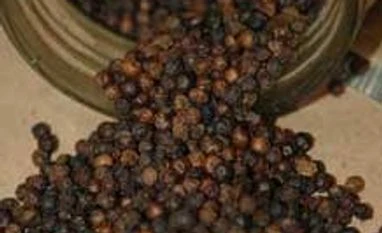 "Vietnam pepper output likely to be 150,000 tonnes, India's 45,000")


 Connect with us on WhatsApp