
Gorakhpur tragedy 'administrative failure', will take action: IMA
IMA has passed three resolutions over the tragic death of children in Gorakhpur's hospital
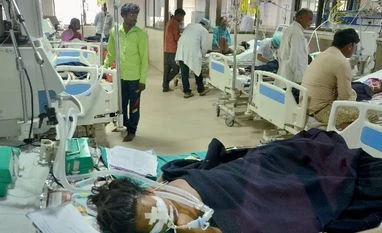 "Gorakhpur tragedy 'administrative failure', will take action: IMA")
WebinarsNew
Deep DiveNew
Explore Business Standard
IMA has passed three resolutions over the tragic death of children in Gorakhpur's hospital
The Indian Medical Association (IMA) on Sunday said that the suspension of only Gorakhpur's Baba Raghav Das Medical College hospital's principal Rajiv Mishra was wrong because the tragedy was an administrative failure and everyone should be held accountable.
"The suspension of only the principal is completely wrong. It's an administrative failure. Everyone should be held accountable. If you're suspending him, then suspend the local admin too and ban the company," IMA president K K Aggarwal told ANI.
He further said that the IMA has passed three resolutions over the tragic death of children in Gorakhpur's hospital.
"The first resolution is that the community and medical fraternity needs to know the reason, that is, if it is due to disruption of oxygen. Secondly, the suspension of only the principal is outrightly wrong. Third and last, the practice of delaying payments in the healthcare sector should be prohibited," he added.
Following the furore over multitudes of deaths at BRD hospital in a span of few days allegedly due to lack of oxygen supply, the principal of the college was earlier suspended from his duties.
The principal, however, later said that he resigned even as he owned up to the responsibility of the whole episode. He also said that the resignation was pre-planned.
Contrary to this, Uttar Pradesh Chief Minister Yogi Adityanath yesterday outrightly blamed the principal for laxity in performing his duty.
"The supplier wrote a letter to the Principal on August 1 which was sent to the DG Medical Education on August 4 and the money was released on August 5. The money was released in proper time. When the money released by the Medical Education administration has reached there, is it the mistake of the Minister or the Principal? It was the careless behaviour of Principal towards his duty," Chief Minister Adityanath said while addressing the media.
According to data procured from the BRD hospital, in five days — from August 7 to August 11, a total of 60 deaths occurred in the hospital.
The procured data also shows the number of oxygen cylinders sent for refilling each day, showing a clear shortage of liquid oxygen in the hospital.
(Only the headline and picture of this report may have been reworked by the Business Standard staff; the rest of the content is auto-generated from a syndicated feed.)
First Published: Aug 13 2017 | 7:45 PM IST

