
Saudi Arabia to review relations with 'untrustworthy' Pakistan
Riyadh angered over Islamabad's failure to join Saudi-led airstrikes against Yemen's Houthi forces in March-April
 "Saudi Arabia to review relations with 'untrustworthy' Pakistan")
Explore Business Standard
Riyadh angered over Islamabad's failure to join Saudi-led airstrikes against Yemen's Houthi forces in March-April
After Pakistan failed to join the Saudi-led Operation Decisive Storm, in which numerous airstrikes were conducted throughout Yemen against Houthi forces between March 26 and April 21 this year, Saudi Arabia has now decided to review its military and economic ties with Islamabad.
According to high-level Arab sources based in Dubai, Saudi Arabia has decided to "cool off " its relations with Pakistan after it failed to join the Operation in which 10 Arab states including Egypt, Morocco, Jordan, Sudan, Kuwait, the UAE, Qatar and Bahrain took part.
Pakistan was missing from the operation because it claimed that its Parliament passed a resolution that the country would remain "neutral" in the Yemen conflict.
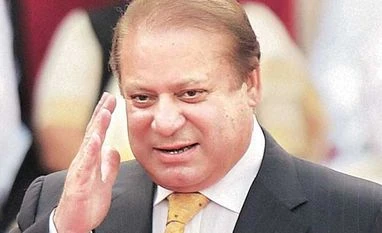
Later, in a damage control exercise, Pakistan's Prime Minister Nawaz Sharif and Saudi King Salman Bin Abdul Aziz had held a luncheon meeting at the Royal Palace in Riyadh. However this failed to placate the Saudis.
Providing details of Saudi anger at Pakistan, sources said Prime Minister Nawaz Sharif, who arrived with a powerful delegation, including Army Chief General Raheel Sharif and Defence Minister Khawaja Asif, was received by Deputy Crown Prince. This in itself was a snub because normally Sharif would be received by the Crown Prince.
Expressing his anger over Pakistan's inability to choose side in the Yemen conflict, Saudi King Salman during the meet made it clear that Saudi Arabia would not ask help from Pakistan in the future if they didn't join them.
As per Dubai-based high-level Arabian insiders, even though Pakistani political parties have been receiving funding for their political activities since 1947, the nation ditched Saudi Arabia's reciprocal relationship.
Recalling the help provided to Pakistan, sources said that since the Cold War, the nation supplied pilots to repel advances by communist South Yemeni forces into Saudi Arabia, while Saudis funded the Afghan Mujahedeen in accordance with the US and Pakistan that repelled the Soviet invasion.
When Pakistan was facing possibilities of international sanctions in 1998 for conducting nuclear tests, the Saudis offered 50,000 free barrels of oil to help cushion the blow, they added.
The insiders further stated that Nawaz Sharif, who was deposed from office in 1999 and was facing murder charges, and his family were rescued through Saudi intervention and provision of comfortable exile until former Pakistan president Pervez Musharraf permitted him to return to the country in 2007.
They further pointed out that because Sharif's daughter was married to a grandson of King Fahd, he became a member of the Saudi royal family. In 2014, Saudi Arabia, which continues to be the largest source of petroleum for Pakistan, boosted the nation's weak reserves with a gift of 1.5 billion dollars after Islamabad's reversal of policy of neutrality in the Syrian War. This has funded the LeT and LeJ as well.
Noting Pakistan's unfaithfulness towards its major ally and donor the US, Arabian sources further said that there was nothing new in the nation ditching them during a crisis.
Branding Pakistan as the 'epicentre of terrorism', sources added that the genocide against minority ethnic communities is growing and military and civil government are at odds with each other with army exercising supremacy.
In 2003, Musharraf helped revive the Afghan Taliban to fight the Americans in Afghanistan, which led to the rapid spawning of the Pakistani Taliban who instead chose to fight the Pakistan Army with the aim of turning the country into a theocratic state.
In 2008, Pakistan under President Asif Ali Zardari failed on every level of governance and quickly became so threatened by the army that Zardari decided to hand over all security and foreign-policy making to Army Chief General Pervez Kayani.
Prime Minister Nawaz Sharif and General Raheel Sharif are at loggerheads once again as has been the past practice between Prime Ministers and Army Chiefs.
Concluding that Pakistan will remain a breeding ground for terrorist groups if its funding isn't stopped immediately, the insiders said that Saudi Arabia has decided to distance itself from Pakistan with terror breeding being another factor going into the Saudi decision.
First Published: Sep 11 2015 | 2:54 PM IST


