
MRI more accurate than ultrasound to predict preterm birth: Study
However, ultrasound has limitations as a predictor of preterm birth
 "MRI more accurate than ultrasound to predict preterm birth: Study")
WebinarsNew
Deep DiveNew
Explore Business Standard
However, ultrasound has limitations as a predictor of preterm birth
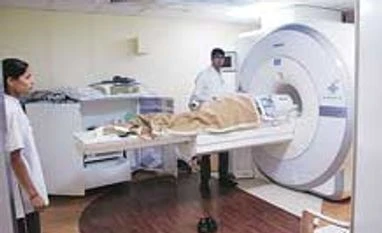
For mothers-to-be, going for an MRI of the cervix area can give more accurate results than ultrasound to predict if some women will give a preterm birth, say researchers.
Early dilation of the cervix, a neck of tissue connecting the uterus with the vagina, during pregnancy can lead to premature delivery.
Women in their second trimester of pregnancy with a cervix measuring 15 millimeters or less, as seen on ultrasound, are considered to be at higher risk of preterm birth.
However, ultrasound has limitations as a predictor of preterm birth, as it does not provide important information on changes in cervical tissue in the antepartum phase just before childbirth.
"A better understanding of the process of antepartum cervical remodeling, loosely divided in two distinct phases called softening and ripening, is critical to improve the diagnosis of cervical malfunction and anticipate the occurrence of birth," explained lead study author Gabriele Masselli from Sapienza University in Rome.
To learn more, researchers used an MRI technique called diffusion-weighted imaging (DWI) to examine pregnant women who had been referred for suspected fetal or placental abnormality.
DWI has been increasingly used for abdominal and pelvic diseases, but has not been tested for the evaluation of the uterine cervix in pregnant patients.
Each of the 30 pregnant women in the study, published in the Journal of Radiology, had a sonographically short cervix and a positive fetal fibronectin test between 23 and 28 weeks of gestation.
Fetal fibronectin is a glue-like protein that helps hold the fetal sac to the uterine lining and the presence of it before week 35 of gestation may indicate a higher risk of preterm birth.
Of the 30 women, eight delivered within a week of the MRI examination. The other 22 delivered an average of 55 days later.
The researchers analysed the difference between an MRI and ultrasound method.
"Our results suggest that MRI has emerged as a powerful imaging biomarker in evaluating patients with impending delivery," the authors stated.
First Published: Mar 21 2016 | 1:45 PM IST


 Connect with us on WhatsApp