
RBI on wait-and-watch mode on interest rates cut: Rajan
We've cut interest rates three times and we're still on an accommodative setting, said Rajan
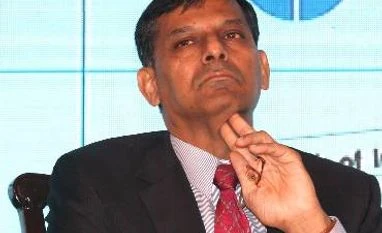 "RBI on wait-and-watch mode on interest rates cut: Rajan")
WebinarsNew
Deep DiveNew
Explore Business Standard
We've cut interest rates three times and we're still on an accommodative setting, said Rajan
Reserve Bank of India (RBI) governor Raghuram Rajan has said the RBI was watching economic data to see whether it can reduce interest rates for the fourth time in recent months.
"Monetary policy has been accommodative. We've cut interest rates three times and we're still on an accommodative setting," he told the Wall Street Journal on Saturday.
"You know, like other central banks, we are in a wait-and-watch mode," he said in an interview on the sidelines of the Federal Reserve Bank of Kansas City's annual economic symposium at Jackson Hole, Wyoming.
"And as the incoming data are analysed, we're looking to see how much monetary room there is for more accommodation," he said.
Asked if the coming down of inflation puts the RBI in a position to ease monetary policy further, Rajan said: "No, you know, capital is attracted to strong economies.
"What we've seen in India is that for the most part we have been attracting capital.
"Now, emerging markets have suffered a loss of capital, outflows, in the last few months. We've had some, nothing too particularly dramatic," he said.
"It's been a little out from the equity markets. The debt flows have stayed pretty much in."
Asked what will drive his decision, Rajan said: "I think the growth feeds in, to the extent that it affects our inflation outlook.
"And if we feel, for example, that global growth is very weak and commodity prices are going to remain low for a long time, that feeds into our inflation outlook also.
"We're on a phase of accommodation. We're still in that phase. We're looking at the data to see what more room we have," Rajan added.
Asked how the uncertainty about the potential for an interest-rate increase by the US Federal Reserve was affecting India, he suggested they should do it once global financial markets settle.
It would be counterproductive if the Federal Reserve did it at a time when there was a lot of market volatility, he said.
"That's been my view for some time, that one has to see what's happening elsewhere also," Rajan told the Journal.
"And this would certainly add volatility. It's volatility we all have to experience and overcome.
"But if it adds to already a high level of volatility, that will not be productive. But if it comes at a time when volatility is relatively low, I think we all know that it has to happen at some point," he said.
Addressing developments in China, Rajan said he was caught by surprise like many other central bankers by China's decision to devalue its currency.
"The Chinese authorities ... say that this is a way to get more market forces to play, something they've been saying for a long time," he said.
"And it is also true that the renminbi had appreciated quite a bit, as it tracked the dollar, against many other currencies in the world," Rajan said.
"So it's hard to argue that it was an unwarranted move from that perspective.
"But it did certainly catch markets and us by surprise."
First Published: Aug 30 2015 | 12:38 PM IST


 Connect with us on WhatsApp