The budget talks of an estimated need for a gigantic Rs 50 trillion investment ($714 billion) in Railways over a period of 12 years. Prime Minister Narendra Modi is the only PM of India who has shown an extraordinary commitment towards capacity augmentation and full-scale modernisation of Indian Railways, starting with his personal involvement in organising the first Rail Shivir to encourage Railway officers to come up with innovative ideas in 2016. Now, with this investment target, he has, once again, put Railways at the centre stage for an outright transformation. This nature of investment delivery, for long gestation rail infrastructure, will, however, be a tight and huge challenge for Railways and its apex management.
Let us first understand what all a Rs 50-trillion Railway spending plan can fetch over the next 12 years. It can deliver 5,000 km of new heavy-haul freight corridors, at a cost of about Rs 2 trillion and modern signaling and automatic train control systems for remaining high-density routes of conventional speed railways for another Rs 5 trillion. Modernisation of 200 large city railway stations would cost about Rs 5 trillion, while preparation of popular routes for semi-high speed would cost another Rs 1.5 trillion. Building ROBs and RUBs to eliminate level crossings would consume more than Rs 1 trillion. Additional funds to the tune of Rs 25,000 crore could help procure 200 rakes of Train 18s and Train 20s, and 7,500 km of very-high speed rail systems, including train sets, would cost Rs 22 trillion. Thus a Rs 50 trillion spend on rail transportation could completely change the face of Indian Railways.
A significant takeaway for Railways, from the Budget speech is evidently, the need to speed up implementation and delivery of infrastructure projects. The railway ministry will have to gear up to prepare a blueprint to match the envisaged modernisation and investment programme. The next challenge is attracting private sector participation. This will require high-quality commercial, technical, and financial due diligence of projects. The Budget has focused on suburban rail transportation as an immediate opportunity for private participation. The commuter ridership of suburban railways, one of the highest in the world, presents a unique opportunity for public-private participation (PPP) in rail suburban systems. Another initiative that can be explored is cross-border leasing of rolling stock, even if a dual gauge has to be introduced.
Sourcing funds and financing may not be too big a problem. In any true PPP venture, sourcing of funding and financing need to be clearly separated. To attract private partnerships, governments have to take the lead in the funding part of the Railway projects like what was done by the Australian government in Alice to Springs Darwin rail line. In India, it may not be that easy for government to raise funds. Still, there are non-conventional ways of raising funds in India, too. One small south Indian state raises funds to the extent of Rs 2,000 crore per annum through state-sponsored lotteries. Imagine what can be the situation if the Central government opens its mind on this issue. Lottery buyers and sellers can become shareholders in Railway projects by suitably modifying the lottery regulations. I do not want to elaborate more on this business model of future Rail projects, where even the public can own the shares. Overall, the Budget proposes a massive development and modernisation of Rail infrastructure and that is good news.
The writer is retired financial commissioner, Railways, and ex-officio secretary to the Government of India
Read this article for free
Register to continue reading premium journalism and analysis from Business Standard.
Disclaimer: These are personal views of the writer. They do not necessarily reflect the opinion of www.business-standard.com or the Business Standard newspaper

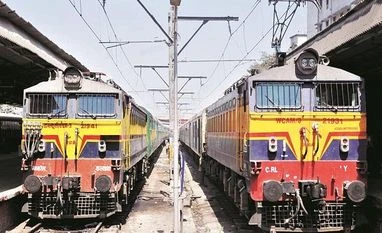 "Sitharaman's maiden Budget gives a massive boost to rail infrastructure")












 Connect with us on WhatsApp