There is an obvious rapid change in the climate; another one in technology, whether it is information, production or that of consumption. And underlying it all is a population with a large number of youth, changes in gender parity, rising health concerns, and confusion on what human capital is required for the emerging world.
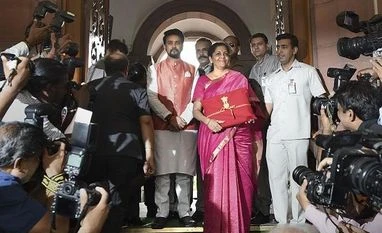
The role of the government in such a world, in my mind, is to create a more flexible, and easy environment for value creation. Now it is about creating a more flexible economy that can quickly respond to rapid changes whether they are in the domain of consumer preferences or technology or for that matter climate. The budget does go some way towards that end.
One, a more flexible and risk-taking government is perhaps the most important precondition for maneuvering through the challenges and riding the opportunities that this changing world is throwing up. It is time for the government to start building pressure on itself by talking about administrative reforms where bureaucracy has more flexibility, is forgiven for making mistakes, is monitored closely, is rewarded well, but is also answerable for non-performance. This is not dealt with in this budget document but needs to be included in all government communications.
Two, an important factor behind the stagnation of manufacturing are transactional frictions and poor contract enforcement. While we need more judges, the Indian judiciary does need to change its practices as well. But a lot of other issues related to contract enforcement don’t need the judiciary. Three elements in the Budget 2019 seek to ease the government-small business frictions. The proposed payment platform for MSMEs, a Legacy Dispute Resolution Scheme on the scores of disputes related to pre-GST days, as well as a proposed electronic invoice system for government payments.
Three, digital payments are by far the most important emerging technology development where India has already made great progress and is on the verge of a big jump forward. There is no doubt on the government’s orientation as well, whether it has to do with the removal of interchange fees, two percent hit for businesses that withdraw cash above Rs 1 crore, and the interchangeability of Adhaar and PAN card which will enable very small businesses to get on the digital payments bus with little effort.
Four, agriculture is undergoing a massive structural shift as productivity rises and jobs disappear, and both will happen simultaneously. My estimates are that somewhere between 40 million and 50 million jobs have been lost in the last one and a half decades in activities related to cereal production. And this will get worse.
Whether it is for exports or domestic consumption, the movement will need to be away from cereals towards higher value alternatives and these will need infrastructure to bridge the rural-urban divide. The same arguments are used in the FM’s speech as well, where Air (Udan-RCS), water and road transport are mentioned in the context of reducing the rural-urban divide. As is also the announcement for a Rs 100 trillion infrastructure investment over the next five years.
Finally, while the Indian government seems to have washed its hands off the climate change problem, but talks more about the pollution problem than take specific action. Lower GST and greater deduction on loans for electric vehicles (EV), and tax incentives for production of relevant battery or higher order electronic items do work towards a cleaner environment.
However, the orientation of the budget is more on production and Make in India, rather than incentivizing lower pollution. Be that as it may, the words for a less polluter Mother Earth with clean skies and rivers are used apparently with sincerity.
The writer is head of Indicus Foundation
Read this article for free
Register to continue reading premium journalism and analysis from Business Standard.
Disclaimer: These are personal views of the writer. They do not necessarily reflect the opinion of www.business-standard.com or the Business Standard newspaper

 "Budget focuses on production and Make in India, not lowering pollution")












 Connect with us on WhatsApp