"Slums are a storehouse of untapped talent and many children languish there because of the lack of opportunities"
premium
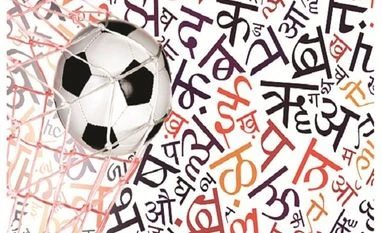
Regional language commentary has been a big hit, even led to a near cult-status for some commentators. One Malayali commentator is an online star for his passion-filled recounting of a goal scored by Cristiano Ronaldo
3 min read Last Updated : Jul 26 2019 | 10:06 PM IST
I have long believed in the transformative power of sports. A recent conversation with a 19-year-old Mumbai girl has reinforced this belief.
Sapna has lived all her life in a slum in Malad surrounded by high rises. “As a child, I would play football with a tennis ball with the boys of my slum,” she recounts. “Few girls wanted, or were expected, to play.” They were never allowed to play with the children in the fancy buildings. “But sports taught me that I could be better than others on my own merit,” she says. “And I practised long and hard until I became a better player than any of them.”
Sapna’s life took a turn for the worse when in 2017, her elder brother, an engineering student, died in an accident. “My father started drinking heavily,” she says. “He forced me and my two sisters to stop our studies and sent us to our village.” This was the darkest time in her life, she adds, but football came to her aid. Her elder sister started working to support Sapna’s passion for the game, even giving tuitions to earn a little extra money. Meanwhile, Sapna had become associated with Slum Soccer, a non-profit that uses football training as a tool for empowerment of slum children, girls in particular. When she was selected to represent India in the 17th Homeless World Cup to be held in Cardiff, Wales, from July 27 to August 3, this year, it was a dream come true.
“I barely knew the world outside my slum,” she says. “I’d never dreamt that a day would come when I would board an aircraft and travel out of India.” When she went to Nagpur on July 1, 2019, to train on Slum Soccer’s Diversity Pitch, Sapna was awed to find herself playing with girls from Manipur, Gujarat, West Bengal and other parts of the country. “I realised for the first time that there were people my age in difficult circumstances across the country, not just in my little slum in Mumbai,” she says. “Initially, we found it hard to communicate with each other but soon we found our common language was football.”
“I want to be a role model for slum children,” says Sapna. “Slums are a storehouse of untapped talent and many children languish there because of the lack of opportunities.” She wants to enable more slum children to play sports and through sports, develop their self-esteem. “On the football field, or any sports arena for that matter, there is no judgement — Dalits, Christians, Muslims and upper castes all play together,” she says. “For someone who has grown up being reviled for being a girl, being poor, being low caste, it’s an amazing feeling.”
Sponsored by BookASmile Foundation (the charity arm of the e-entertainment platform BookMyShow) and supported by Slum Soccer, Sapna, along with 15 teammates, is in Cardiff now playing friendly matches. At the time of writing this column, Slum Soccer has shared images of Sapna and her teammates in Wales. An image of them jubilantly posing with the Indian Tricolour is particularly heart-warming. For these unusual young women have beaten life’s odds to earn their place on Team India and that’s a well-deserved achievement.
Disclaimer: These are personal views of the writer. They do not necessarily reflect the opinion of www.business-standard.com or the Business Standard newspaper




