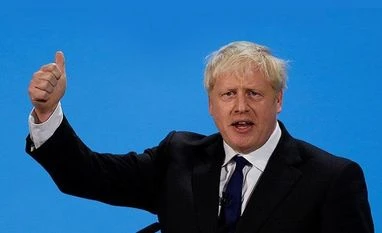
The only certainty about Boris Johnson’s election as British Prime Minister is that trade and business can expect more uncertainty as far as the process to leave the European Union (EU) is concerned. Mr Johnson has revelled in his maverick image in various public positions he has held, from mayor of London to foreign secretary. But as he takes charge at Downing Street on Wednesday, he may find himself up against challenges of far greater consequence than a dodgy project award or an argument with Italians over Prosecco sales. Unlike the embattled Theresa May, Mr Johnson has showed his hand. He campaigned hard for “Leave”. He wants a “hard Brexit” (meaning the UK would leave the EU, single market and customs union) and, failing that, crashing out with “no-deal”. The stances may be clear, but the implications of these positions on business are not.
His predecessor’s thrice-defeated Brexit deal, which saw the deadline postponed twice, underlined the polarisation of Parliament and the electorate. In his acceptance speech, Mr Johnson said he would “get Brexit done by October 31” with a “new spirit of can-do”. But he takes charge of a government that is largely hostile to his swashbuckling Brexiteering. Two members of the government have already resigned and several key Cabinet ministers, including Chancellor of the Exchequer Philip Hammond, were threatening to resign if he were elected. By-elections next week could reduce the Conservatives’ slender seven-seat majority in the House of Commons to just two, making it difficult for him to gain support for any Brexit deal he may negotiate before the new October 31 deadline. Also, Parliament has given Mr Johnson less of a free hand, voting, first, against a “no-deal” withdrawal and then voting against Parliament being prorogued to push through such a deal.
Mr Johnson now has a little over 90 days to negotiate an alternative deal. The core of the problem that brought down Ms May remains: How to deal with the border between the Republic of Ireland, a EU member, and the UK’s Northern Ireland. The issue is complicated by the fact that the Conservatives depend for their Parliamentary majority on an Irish unionist party, which does not want any exceptions for Northern Ireland in this deal. Ms May’s deal sought to address this with a “backstop”, which would entail the whole of the UK remaining within the EU for the duration of the discussions over the new relationship but without any say in any rule changes. Predictably, this projected indefinite diminution of the UK’s negotiating position — which was the proximate reason for Brexit in the first place — attracted opprobrium across party lines. Within the Conservative party, the “backstop” clauses heightened demands for the exit of Ms May, and Mr Johnson was at the forefront of those calls. Confusingly, however, he had voted for Ms May’s discredited deal in its third vote. With the UK economy expanding at its slowest pace since 2012, the chaos of “no deal” is the last thing it needs.

 "Boris and Brexit")












 Connect with us on WhatsApp