Last week, the Commerce Ministry said that the negotiations for India-UK Free Trade Agreement (FTA) will commence from November this year. The governments in both the countries are eager to conclude an interim agreement quickly but the businesses are yet to warm up to the idea.
Under various trade agreements, India allows imports of certain goods at lower rates of duty mostly from countries in Asia, Africa and South America. The imports from the least developed countries and most developing from these regions have not gone up significantly. However, the imports from Japan, Korea, Malaysia, Singapore have gone up and so, the government has notified bilateral safeguard rules to help cope with any surge in imports from these countries and also the countries that are members of the Association of South East Asian Nations (ASEAN). The processes for claiming exemptions under related customs exemption notifications have also been tightened by placing onerous obligations on the importers through the Customs Administration of Rules of Origin under Trade Agreement Rules, 2020 (CAROTAR, 2020).
In its Foreign Trade Policy Statement 2017, the Commerce Ministry said that we have not been able to derive full advantage out of our trade agreements with Korea, Japan and ASEAN and that the Industry would need to be competitive to take advantage of FTAs. That is one of the reasons why, after participating in the negotiations for several years, India walked out of the Regional Comprehensive Economic Partnership (RCEP) deal that includes the ten ASEAN countries plus Australia, New Zealand, South Korea, Japan and China.
A study published by the Niti Aayog, a government think-tank, says that India should review and assess its existing FTAs in terms of benefits to various stakeholders like industry and consumers, trade complementarities and changing trade patterns in the past decade. Negotiating bilateral FTAs with countries where trade complementarities and margin of preference is high may benefit India in the long run. Higher compliance costs nullify the benefits of margin of preference and therefore, reducing compliance cost and administrative delays is extremely critical to increase utilization rate of FTAs. Proper safety and quality standards should be set to avoid dumping of lower quality hazardous goods into the Indian market and circumvention of rules of origin should be strictly dealt with by the authorities. The conclusion of the report is that FTAs have to be signed keeping two things in mind - mutually reciprocal terms and focusing on products and services with maximum export potential.
India maintains a higher level of tariffs than the developed countries. So, in a FTA with such countries, the partner countries are more likely to gain through deeper tariff cuts by India. Consequently, imports by India from the partner countries may increase more than exports from India to the partner countries. So, the Indian businesses are not very enthusiastic about the trade agreements. The Commerce Ministry is, however, hopeful of substantial gains through such agreements with developed countries, especially in the area of trade in services.
After leaving the European Union, the United Kingdom is very keen on entering into bilateral trade deals with various countries and even regional trade groupings like the Trans-Pacific Partnership. Its eagerness to conclude fresh trade deals gives India a critical negotiating leverage that can be exploited with useful inputs from the Indian businesses.

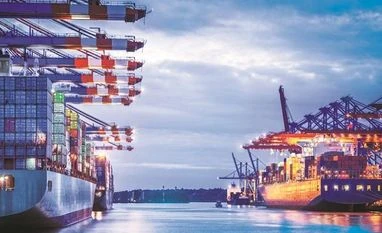 "Businesses should give useful inputs for FTA negotiations")












 Connect with us on WhatsApp