Coal's problems are governance, not climate regulation

In a few short weeks, the world's leaders will gather for the United Nations' 26th Conference on Parties
coal
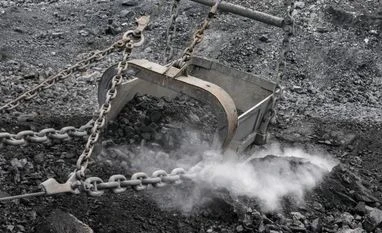
Representative image of coal mining. (Bloomberg/File photo)
Mihir S Sharma
5 min read Last Updated : Oct 08 2021 | 11:01 PM IST
It is the worst news possible for a world struggling to recover from a pandemic while also trying to increase its effort to combat climate change: Power shortages in China and India.

China is harder hit than India, given that it is also dealing with the shadow over its construction and real estate sector — not to mention local government finances — caused by the Evergrande collapse. Various forecasters have cut their estimates of 2022 growth in China by about 0.5 percentage points; and the growth hit in the current quarter might be more than 1.5 percentage points. India’s coal shortages have not yet translated into widespread and significant reductions in expectations of growth in the current year, but that might change if there are major industrial power cuts when the festive season hits and expands consumer and household electricity demand. The Union power minister has warned that supply constraints could last for six months.

Although China and India have both made major investments in renewable energy, they continue to depend upon coal-fired thermal power plants for reliable electricity. They face similar problems in terms of coal supply, given that the spot price for seaborne high-quality thermal coal has now crossed $200 a tonne — a new record, surpassing one set just before the 2008 financial crash. This has limited options for coal imports, just as domestic coal mining has stumbled. Stockpiles of coal in India have crashed from around 50 million metric tonnes when the pandemic hit in 2020 to under 10 million tonnes today. Coal-fired power plants in India entered October with about four days’ worth of coal inventory; it’s usually a couple of weeks’ worth at least.

In a few short weeks, the world’s leaders will gather for the United Nations’ 26th Conference on Parties — the climate change conference in Glasgow generally called COP26. The great hope was that the success of renewable energy in recent years would allow for countries to speed up their transition away from high-emissions fossil fuels — particularly coal. It is hard to see how headlines declaring that a coal shortage is hampering economic recovery in the two biggest engines of global growth will aid in achieving consensus at Glasgow.
 
This is particularly true because the subtext of much reporting and commentary about the coal shortages is that sharper regulation of emissions is responsible for it. Policy makers in a country like India who simply scan the headlines might be forgiven for thinking that China’s troubles in particular are a reminder of the dangers of transitioning quickly away from coal.

But that is only part of the story, and not the most important part. The fact is that although many supply restrictions have come into force in multiple economies, the basic problems for this electricity shortage are those of market structure and governance — just as they have always been. And, if anything, climate change-associated weather events have played a greater part than normal, with peculiar rainfall patterns and associated floods delaying shipments from the coalfields in India’s east-central states.

In China, supply constraints are being hyped up but are not the immediate problem for the market breakdown that leads to power cuts. The problem is that electricity prices are capped for end-users, meaning that demand cannot organically respond to temporary supply constraints or surges in the price of imported coal. Beijing, deeply conscious of the effects that consumer price inflation might have on the Communist Party’s popularity, allows producer prices to soar but keeps the components of consumer inflation — including electricity prices — under strict control. Without pricing freedom, Chinese power plants will not be able to import the coal they need to overcome temporary supply constraints. (The problem has been made worse, of course, by Beijing’s political decision to stop imports of Australian coal.) This is a governance and management issue, not one of harsh regulation.

In India, meanwhile, the last time that nationwide power cuts appeared to be a real threat, there were significant constraints on coal production that had nothing to do with environmental regulation — Supreme Court decisions, strikes, and mismanagement within Indian Railways. Once again, the coal supply problem in India lies somewhere in between the extraction and consumption of coal. Coal India claims it has returned to pre-pandemic levels of production, effectively blaming the problems on the Railways’ negligent treatment of coal trains — although moving coal provides almost half of the Railways’ freight revenues, and more than half of its profits. Here too, there is a governance issue to be resolved.

Policy makers would be wrong to look at this power crisis and assume it means that more climate-friendly regulation is the problem. Power crises are being caused for the same reasons in 2021 that they were decades ago: Unreformed pricing, poor management of infrastructure, and patchy governance. It’s got nothing to do with climate action.

One subscription. Two world-class reads.

Already subscribed? Log in

Subscribe to read the full story →
*Subscribe to Business Standard digital and get complimentary access to The New York Times

Smart Quarterly

₹900

3 Months

₹300/Month

SAVE 25%

Smart Essential

₹2,700

1 Year

₹225/Month

SAVE 46%
*Complimentary New York Times access for the 2nd year will be given after 12 months

Super Saver

₹3,900

2 Years

₹162/Month

Subscribe

Renews automatically, cancel anytime

Here’s what’s included in our digital subscription plans

Exclusive premium stories online

  • Over 30 premium stories daily, handpicked by our editors

Complimentary Access to The New York Times

  • News, Games, Cooking, Audio, Wirecutter & The Athletic

Business Standard Epaper

  • Digital replica of our daily newspaper — with options to read, save, and share

Curated Newsletters

  • Insights on markets, finance, politics, tech, and more delivered to your inbox

Market Analysis & Investment Insights

  • In-depth market analysis & insights with access to The Smart Investor

Archives

  • Repository of articles and publications dating back to 1997

Ad-free Reading

  • Uninterrupted reading experience with no advertisements

Seamless Access Across All Devices

  • Access Business Standard across devices — mobile, tablet, or PC, via web or app

More From This Section

Disclaimer: These are personal views of the writer. They do not necessarily reflect the opinion of www.business-standard.com or the Business Standard newspaper

Topics :Climate ChangeBS OpinionEnvironmentrenewable energyCoal shortage

Next Story



