Urjit Patel’s resignation as governor of the Reserve Bank of India (RBI), the first such resignation in the post-liberalisation period, is a moment of crisis for institutional autonomy in India. It is essential that the government moves swiftly to restore confidence in the central bank’s autonomy, which may have been dented by Monday’s events, which took everyone by surprise. An independent RBI is a crucial pillar of India’s institutional strength and one that makes it attractive to global capital. The achievements of the past few years have included a general acceptance that the RBI is committed to low and stable inflation — exactly the expected outcome, given an independent central bank. Thus, recent moves to politicise the RBI’s functioning, including the appointment of independent directors to the RBI board, are worrying developments. Concerns about politicisation are now only enhanced, thanks to this unfortunate and unexpected resignation. Certainly, Mr Patel did himself no favour through a failure to maintain open lines of communication with the government in New Delhi. Nevertheless, there was an optimistic belief after the last marathon meeting of the RBI board last month that an immediate collision between the central government and Mint Road had been averted. But it appears such hopes were unfounded.
It is important now for the government to reach out and persuade other elements of the central bank leadership, including deputy governors, to stay on and provide continuity. The worst possible outcome would be an institutional vacuum. The government must not be caught up in responding to the immediate concerns of, say, the stock market, but instead should keep an eye on long-term strength and stability. The most crucial immediate action must be to put into place a mechanism that would ensure a competent successor to Mr Patel, while also demonstrating a proper respect for the RBI’s autonomy. Any hint of politicisation of the governor’s office would, under such circumstances, be deeply unwise. The next governor will have to show a respect for continuity, for the RBI’s clear mandate to control inflation and maintain macroeconomic stability, as well as necessarily committing to clear and open lines of communication with the powers that be in the Union government.
That is important, as Mr Patel’s successor will have to sort out at least three critical issues with the government — prompt corrective action (PCA), the economic capital framework, and liquidity in the system. Currently, 12 banks are under PCA, which places curbs on lending, expanding branch network, and dividend distribution. While the government wants the RBI to relax the rules so that banks can lend more easily, the RBI wants these banks to be slowly nursed back to health. Capital is another thorny issue, as the government wants reduction in the capital adequacy ratio of state-run banks to 8 per cent from the current 9 per cent. But the RBI thinks it’s a pointless debate, as banks should not live hand-to-mouth at the “poverty line of minimum capital”, a phrase coined by RBI Executive Director Sudarshan Sen. Adequate liquidity is yet another sticking point. These are important issues that need to be settled fast.

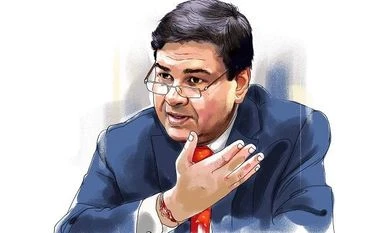 "Crisis at Mint Road")












 Connect with us on WhatsApp