Why have debt defaults of gigantic proportions become commonplace everywhere? How is it that globally, the debtors get away with defaults so easily?
A little history is instructive here. Until just three decades ago, the domestic defaulter was allowed to go bankrupt and all his possessions were sold off. If necessary, he or she went to jail.
International debt default punishment was similar. The defaulting country was crucified, along with its people. In the case of Latin America in the early 1980s and East Asia in the late 1900s, practically entire continents were impaled.
Then two horrible ideas took shape. One was called the “stability of the global financial system”; the other, after 2008, “too big to fail”. Both were the creations of the Wall Street, designed to protect its interests.
Soon debtors started getting off relatively lightly while creditors tonsured the taxpayer to get back as much as they could. People who were not parties to the contracts were made to pay. Default thus became an option, if not actually attractive.
We in India, who copy the West blindly, followed suit. As a result, we have seen how major defaulters have decamped to safe havens with covert but full political support. Or how, if they can “manage” the system, they are spending happy days at home with their families.
In short, the intent and nature of the loans game has changed. This underlying transformation is an important reason for the Indian slowdown. It's frozen our banks in their tracks.
Remember Nicholas Brady?
The first step to be taken in making default safe, and therefore attractive, was in America in the late 1980s during the decade long Latin American debt crisis.
Nicholas Brady was the US treasury secretary, or finance minister, who pushed the idea that bad private and sovereign debt had to be taken off the books of banks, meaning American banks. These had lent indiscriminately in Latin America.
He created a set of bonds, underwritten by the US government, via 30 year zero coupon bonds. The International Monetary Fund and the World Bank also signed on. In some cases the Federal Reserve of New York also held their hands.
But these were contingent liabilities. They stayed off budgets and would enter them only if the bonds went bad.
This arrangement allowed the debtor country to issue these tradable bonds in exchange for their debt. In time, these bonds became very valuable because that way the banks could get the debt off their balance sheets.
This is the precise problem that the government and the RBI are struggling with. But they are thinking in terms of crude recapitalisation by giving money to the banks, who, in the future, will still be vulnerable to political pressure.
Anyway, once the terms of the Brady bonds had been settled, a bank could either exit or hold on in expectation of a capital gain. Exit, on the other hand, meant you were out on the Street clean and could raise fresh capital.
Either way, it reduced the extent of American banks' haircut by proportionately increasing taxpayers' haircut in the debtor countries. The jargon for this was "spreading the risk". But the effect was the same: Bystanders got scr**ed. Had Colin Powell been an economist, he would have called this collateral damage.
Indian version
We have also done a Brady bond type thing for the NBFCs. Last July, the finance minister said that for some good NBFCs, the banks would buy their debt up to Rs 1 trillion and the government would underwrite 10 percent of that.
But sadly, bonds are not a part of this solution. Thus the liability is not a fully contingent one. It's a peculiar mixture aimed at assuaging rather than really solving the problem. The argument is the same as in the US in 1989 and 2008: Too much is owed by these guys and they are too important to fail.
But that takes care of only one side of the problem because the debt of the public sector banks remains. The real question now is to see to whom we pass on that debt, and how. This is what should engage the government's attention in 2020.
The taxpayers cannot be the sole beast of the debt burden. As was pointed out by Jean-Baptiste Colbert, finance minister to Louis XIV of France, “the art of taxation consists in so plucking the goose as to obtain the largest number of feathers with the least possible amount of hissing.”

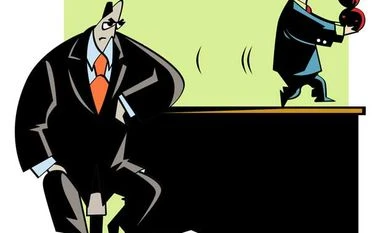 "Dealing with debt default")












 Connect with us on WhatsApp