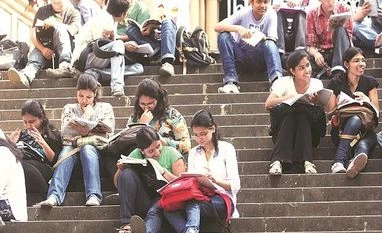
This is the time when youth are frantically running for admission to professional colleges, making it almost an academic e-battlefield. Shortly, the scene will shift to the courts. This was going on for more than three decades. In 1989, the Supreme Court wrote that “Indian civilisation recognises education as one of the pious obligations of the human society. To establish and administer educational institutions is considered a religious and charitable object. Education in India has never been a commodity for sale.” That was said when a private medical college in Bengaluru sought Rs 60,000 as capitation fee from a girl candidate.
Times have changed so much that education has become crass business. The Supreme Court has gradually admitted this reality. Recent judgements talk about higher education as part of the right to carry on trade and business, not philanthropy. Politicians and entrepreneurs flaunt the number of professional colleges they own as their badge of eminence. Websites advise you how to start a million-dollar education business in 10 steps. As a result, courts are flooded with petitions challenging the admission practices of various universities and colleges. Two judgements of the Supreme Court, delivered by vacation benches last week, are warnings of litigation yet to come once the admission season is over and the courts reopen after the summer vacation.
The most serious and recurring issue before the courts is the quality of medical and engineering colleges. The regulators grant recognition to substandard or ‘shell’ colleges; the managements are said to collect up to Rs 1 crore for a full course; they admit more than the permitted number of students. This breeds rampant corruption. Last week, the chief justice of India wrote to the prime minister to remove a judge of the Allahabad High Court for granting recognition to ineligible medical colleges.
Though the judgements on professional colleges are in scores, they are not consistent and the orders are ad hoc, solving only the problem of that season for particular institutions. Therefore, more petitions are filed citing earlier orders and seeking clarification of the previous ones. Clarificatory orders telescope back decades and are a rich harvest for lawyers.
Students who get admission in low-grade colleges often take a calculated risk. Their continuance in the course is a matter of chance. In some cases, the Supreme Court has allowed them to complete the course but in some others, the managements have been told to return huge amounts as compensation. In last week’s judgement in the case, Foundation for School of Management vs AICTE, the educational institution sought more seats but permission was not given. Despite that, the college admitted students far in excess of the sanctioned seats. The management then moved court for approval of the excess seats on the ground of investments already made and shortage of doctors. The court initially directed it to deposit Rs 4 crore. AICTE on its part imposed Rs 23 crore as penalty for flouting its policy. The court approved of it stating that the college had illegally admitted excess students endangering their careers. In fact, the college was “let off lightly when more stringent punishments were available.” Showing mercy to the affected students, they were allowed to complete the course and take the degree.
In the second case, Education Promotion Society vs Union of India, the umbrella body of professional colleges sought more time to carry out counselling as many seats are lying vacant. The court observed that there was no consistency in fixing the schedule for admissions and such irregularities were being exploited by many private managements. They admit undeserved students and charge high fees. The court ruled that if some seats remained vacant, it could not be helped.
It would take iron will for the new government to bring order in higher professional education. It is bound to face immense pressure because the tainted money raised through the business of education is one of the tributaries flowing into politics and the electoral process. Courts can only adjudicate disputes over admissions and recognition of institutions, but it is for the government to lay down a comprehensive policy and oversee its implementation.
Read this article for free
Register to continue reading premium journalism and analysis from Business Standard.
Disclaimer: These are personal views of the writer. They do not necessarily reflect the opinion of www.business-standard.com or the Business Standard newspaper

 "Education in business suit")












 Connect with us on WhatsApp