About the Meena tribe, “The actual number of convictions of the Minas is more than doubled by convictions under the Criminal Tribes’ Act. From this statement it appears that, while the Jats, Brahmins, and Ahirs are comparatively law-abiding, the Gujars, Meos and Banias are the classes more addicted to crime, while the Minas far and away distance all the others in this respect. If the Meos and Gujars are to be classed as criminal classes, the Banias should be placed along with them. Indeed, except in the year 1878, when Mewat suffered most from scarcity, the Meos were entitled to be classed among the less criminal tribes… If anything can be inferred from this, it would appear that the Jats and Gujars are now comparatively less criminal than they were, while the Ahirs and Banias are much more so. The only tribe to which the provisions of the Criminal Tribes’ Act have been extended is the Minas, who are found chiefly in the outlying town of Shahjahanpur, which is surrounded on all sides by the Alwar territory. There are smaller bodies of them residing in Guraora, &c. They are most incorrigible robbers, and notwithstanding the most stringent precautions, numbers of them manage to absent themselves from their homes on distant dacoity expeditions, chiefly in the Rajputana States. They are skillful in planning the highway robberies in which they most delight, and bold in executing them, being generally prepared to meet resistance with violence. Proposals have been made to give them land and establish them in a reformatory village, or to employ them in a class regiment. Their fellow-tribesmen in Alwar are employed in military duties, and make excellent cultivators... It is, however, satisfactory to notice that, since the above description of the character of the Minas was written, the number of them convicted of crime has decreased, and that many of them have taken to agriculture and other honest callings, while others have taken service in the police, and some again have obtained employment as village watchmen.”

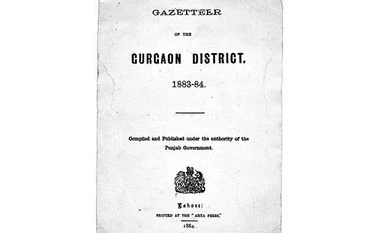 "Gurgaon in 1883")












 Connect with us on WhatsApp