India is urbanising at a much faster pace than the UK or the US did. India's urban population is expected to reach 600 million by 2030, twice the size of America's. Will India's urban awakening enable the country to benefit from its demographic dividend? Smart urbanisation and demographic dividend has the potential to create 10 million jobs a year and achieve double digit growth rates. Lopsided urbanisation also has the potential to result in a demographic disaster.
Cities create the space for structural and spatial transformation, entrepreneurship, and achieve a faster pace of economic growth and job creation. Cities have the potential to generate 70 per cent of India's output and job growth over the next 20 years, a process that could drive four-fold increase in India's per capita income. While promising and greatly desired, smart urbanisation also imposes unprecedented managerial and policy challenges. A lot will depend on how India manages to scale up its investments in physical and human infrastructure to accelerate the pace of urbanisation and spatial transformation.
Unlike in developed economies, India's urbanisation is being spearheaded by the service industry, while the manufacturing sector is de-urbanising. This process has improved the urban-rural allocation of industries.
India’s spatial development path is also turning out to be very different than the experience in China and US. Service industry has continued to concentrate in high-density cities, and not in medium size cities. Indeed, poor access to infrastructure has prevented India's medium-density cities from growing, and taking full advantage of urbanisation and agglomeration forces.
The two most consistent factors that predict what attracts entrepreneurs to any city is its level of education and the quality of local physical infrastructure. These patterns are true for both manufacturing and services sectors. Empirical evidence has shown that the forces of urbanisation are much stronger in India than in the US, although the quality of physical and human infrastructure is a bigger deterrent in India.
Policy challenge
India's fast pace of urbanisation will continue to accelerate the pace of knowledge diffusion, innovation, connectivity, and output growth and job creation. As a latecomer to urbanisation, India will also benefit from technological innovations — including digital technologies, cleaner energy, innovative construction materials, and new modes of transport — that will enable it to leapfrog some of its more developed counterparts.
But rapid urbanisation also poses challenges, from managing congestion and pollution to ensuring that growth is inclusive and equitable. The big challenge is that India's future growth and job drivers will not be in its mega cities, but in the medium-size cities, just like it has been in China and the US. High population density of a city makes large-scale manufacturing enterprises less competitive and forces them to move to rural settings. But the medium-density locations in India are currently the worst places for entrepreneurs and jobs.
What is preventing medium-density locations in India from growing fast?. In India, millions still lack access to electricity and roads, and safe drinking water. Addressing these deficiencies is critical to development — and India is no exception. The key to success will be to improve the efficiency of public spending, and attracting more private investment.
There is certainly an economic incentive for private actors to channel their money towards developing country infrastructure. This requires vision
City leaders will need to leverage their local assets, including land, mobilise user revenue, and modify financial regulations and incentives to increase investors’ risk appetite. Add to that greater technical and financial capacity, and it would become much easier to attract the needed private funds and build partnerships benefiting India's urban awakening.
It is important for policy makers to recognise that much of urbanisation in India is taking place through the small enterprises. They constitute a majority of entrepreneurs and 90 per cent of jobs. Informality is not going away — it is growing. Much of the employment growth in the manufacturing sector has come in small establishments in the tradable sector in India. Informality should be encouraged. Policy makers looking to promote city competitiveness in their local areas have several policy levers to exploit. India has all the tools it needs to advance a smart urbanisation agenda in a way that promotes inclusive and sustainable growth. It must use these tools wisely. Policy makers should take an inclusive, rather than exclusionary, approach to the medium and small size cities and the informal economy and small enterprises.
Indian cities should find ways to ensure that urban informal livelihoods are integrated into urban plans, land allocation, and zoning regulations. Urban informal workforce need to gain access to basic urban infrastructure services and become an integral part of the policy-making processes.
The writer is lead economist, World Bank
Read this article for free
Register to continue reading premium journalism and analysis from Business Standard.
Disclaimer: These are personal views of the writer. They do not necessarily reflect the opinion of www.business-standard.com or the Business Standard newspaper

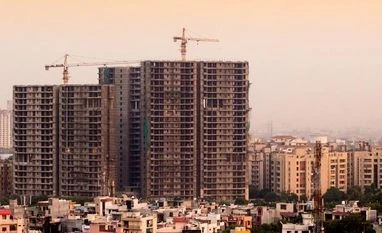 "India's urban challenge")












 Connect with us on WhatsApp