The excitement over the Indo-Pak ceasefire announced by the Director General of Military Operations (DGMOs) of the two countries should not be interpreted as a decisive move towards resuming the peace process. Regimes in New Delhi and Islamabad have little domestic political capital invested in lasting peace, and the change in Jammu & Kashmir’s special status is unlikely to foster reconciliation. This latest ceasefire essentially reiterates an unwritten agreement of 2003 that preceded a meeting between then Prime Minister Atal Bihari Vajpayee and Pakistani President Pervez Musharraf on the sidelines of a SAARC summit. It was observed till 2008 when Pakistani terrorists attacked Mumbai. Escalating violations since then produced another informal agreement between DGMOs in 2013, which held only till about 2014. When cross-border firing peaked in 2018, yet another DGMO-level agreement was announced. This one resolved to observe the 2003 agreement in “letter and spirit”. But given the rising tensions in the aftermath of the Balakot air strikes in 2019, this ceasefire went the way of the others. Since then, cross-border firing has peaked to the point that there were reportedly over 5,000 violations in 2020 alone, destroying agricultural activity and villages on both sides of the Line of Control (LoC).
Given this recent history, it is uncertain how long the latest agreement will last. But it is clear that it offers both countries breathing space to pursue immediate military and political goals. For India, the obvious one is to circumvent the problem of a two-front situation in the light of China’s encroachments along the Line of Actual Control (LAC) in Ladakh, enabling it to transfer some military formations from the LoC to the LAC. Though this may be deemed unnecessary, given Sino-Indian disengagement along the Pangong Tso in southern Ladakh, talks over withdrawal in the more northerly Depsang Plain have not yielded results so far, demanding abundant precaution from India in terms of military preparedness through the winter. Too much should not be read into this, however.
If the ceasefire offers India relief in the frozen fastnesses of the Himalayas, the threat in the turbulent waters of the Indian Ocean remains. Here, China is buoying Pakistan’s almost non-existent navy in a major way. The two allies have contracted for four modern frigates and eight submarines and in January, China launched the second guided missile frigate for the Pakistani navy. Despite this close Sino-Pak military embrace, there have been tensions between Islamabad and Beijing over delays and other inefficiencies in joint economic projects, such as the Gwadar port. A unilateral ceasefire offers Pakistan the opportunity to send China some signals of independence, however feeble, from its authoritarian ally.
It is also no coincidence that the US has welcomed the ceasefire, and the state department has urged both countries to continue negotiations even as it cautioned Pakistan from sending militants across the border. Both New Delhi and Islamabad have messages to send the new US administration as it resets relations with China and restarts talks on the future of Afghanistan, in which the Pakistani military hopes to resume its egregious engagement. The fact is that all these exogenous factors have been in play since 2003, without much progress on either side. The latest ceasefire, with all the emollient language in the joint statement, is to be welcomed. But the Indian Army’s decision not to relax its anti-terrorist operations is probably a sensible one.

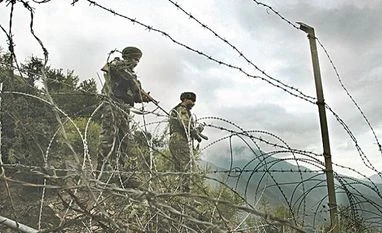 "Indo-Pak on a break")












 Connect with us on WhatsApp