Bankruptcy code: Know the new world of insolvency professionals

Those who don the IP hat are usually chartered accountants or business managers
graph
Veena Mani
Last Updated : Jun 26 2017 | 4:31 AM IST
Insolvency professionals (IPs) are the new kid in town — in great demand particularly after the RBI asked banks to recover their bad debts on 12 large accounts through the new route. It is estimated that there are around 500 registered IPs in the country since the enactment of the Insolvency and Bankruptcy Code in May 2016. About 12 insolvency services agencies have come up in the past six months.
 
Those who don the IP hat are usually chartered accountants, cost accountants, company secretaries, lawyers, or business managers. However, one has to clear a regulator-mandated (Insolvency & Bankruptcy Board of India) examination to be an IP. 
 
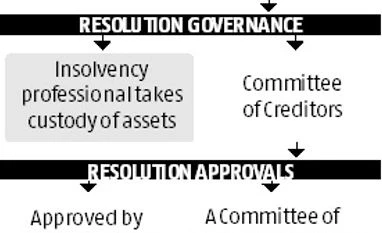
A case for insolvency can be filed by the company itself (debtor) and creditors. Creditors could be financial institutions or operational ones such as those that provide services to the company such as vendors and suppliers. After a case for insolvency is admitted by the National Company Law Tribunal (NCLT), IPs have to prepare a proposal to restructure the company to the Committee of Creditors. After approval by the committee, IPs take over the company concerned and run it like promoters for 180 days, extendable by another 90 days. If a turnaround does not happen by this time, the company goes for liquidation.
However, the going need not be smooth for IPs as the resolution and liquidation process gathers steam. Mamta Binani, an IP and former president of the Institute of Company Secretaries of India (ICSI), says a successful IP has to get to grips with all aspects of running a company. A Delhi-based IP says how his team had to apply force to take control of the company that was going insolvent. “We were dealing with a company which was family-owned. Some of the employees were also family members. They ganged up against the team of IPs. We had to use force to take possession and begin the resolution process.”
 
A Kolkata-based insolvency professional says how much uncertainty the insolvency professional has to deal with in formulating a resolution for the company that has gone insolvent.
 
“Even after speaking to all creditors and coming to a consensus on the resolution plan, there is no surety of all of them casting their votes in favour of the plan,” he says. It will be learning on the job for those entering the fledgling profession.

One subscription. Two world-class reads.

Already subscribed? Log in

Subscribe to read the full story →
*Subscribe to Business Standard digital and get complimentary access to The New York Times

Smart Quarterly

₹900

3 Months

₹300/Month

SAVE 25%

Smart Essential

₹2,700

1 Year

₹225/Month

SAVE 46%
*Complimentary New York Times access for the 2nd year will be given after 12 months

Super Saver

₹3,900

2 Years

₹162/Month

Subscribe

Renews automatically, cancel anytime

Here’s what’s included in our digital subscription plans

Exclusive premium stories online

  • Over 30 premium stories daily, handpicked by our editors

Complimentary Access to The New York Times

  • News, Games, Cooking, Audio, Wirecutter & The Athletic

Business Standard Epaper

  • Digital replica of our daily newspaper — with options to read, save, and share

Curated Newsletters

  • Insights on markets, finance, politics, tech, and more delivered to your inbox

Market Analysis & Investment Insights

  • In-depth market analysis & insights with access to The Smart Investor

Archives

  • Repository of articles and publications dating back to 1997

Ad-free Reading

  • Uninterrupted reading experience with no advertisements

Seamless Access Across All Devices

  • Access Business Standard across devices — mobile, tablet, or PC, via web or app

Next Story



