Authority only really works on people who agree to consider it authoritative. Not authority like the police and the courts—obviously those guys have guns, and jails, and can physically impose their will upon you. I mean authority like the power to control people’s minds and lead them by the nose down whatever nasty little majoritarian alley they want. That kind of authority needs—nay, is absolutely at the mercy of—citizens’ individual cooperation in treating it like the big strong manly alpha dog that it wants to be.
This is a shaky leg to stand on. And you know what sneaks up and nudges that leg in the back of the knee, making it wobble and look silly? Jokes! Jokes are kryptonite to authority. They are to pompous egos what needles are to soap bubbles. They make people laugh and point when they should be bowing and scraping. This is why politicians and godmen are such a thin-skinned, humourless lot, and make such free use of guns and jails. They hate being made fun of—it’s bad for their image as fearsome, wondrous people wielding fearsome, wondrous power over masses faint with admiration. The more they suspect people of mocking them, the more they fall back on guns and jails. This is also why their followers insist on respect for their leader, else their feelings will be hurt, and, you guessed it, we’re back to guns and jails.
In Myanmar in the late 1990s, people wouldn’t say a word about the military junta in public. But they whispered indignantly about a comedy trio, the Moustache Brothers. Two of them had been sentenced to seven years in a labour camp for an act criticising the government. Years later, in 2008, the famous Burmese satirist Zarganar was sentenced to 59 years in prison, though he was freed by amnesty in 2011. The whole editorial team of French magazine Charlie Hebdo suffered the most extreme review of their work when they were gunned down by Islamic fundamentalists who didn’t find them funny. The wildly popular Egyptian satirist Bassem Youssef was arrested in 2013 for mocking President Morsi.
Closer to home, in January 2016, comedian Kiku Sharda was tossed in the clapper for a couple of weeks for mimicking Dera Sacha Sauda chief Gurmeet Ram Rahim Singh and offending his followers’ sentiments. This month, a young man in Uttar Pradesh ended up in the clink for posting a morphed image of the new chief minister, Yogi Adityanath; and another young man in Maharashtra was arrested for uploading a photo of a warrior-king with Mr Adityanath’s face stuck on it, after his friends ratted him out to a pro-Maratha reservations organisation.
In other words, politicians and god-botherers fully understand that humour is the pointiest, pokiest form of resistance. It is also, by nature, untameable. Turkish president Recep Tayyip Erdogan, who cracked down on hundreds of people who make fun of him, found this out the hard way: His crackdown only inspired even more jokesters and satirists.
For its creativity, for revealing uncomfortable truths, for its sturdy self-respect, and for its refusal of mind control, we should, this April Fool’s day, celebrate the many delicious forms of humour available to us—light comedy, wit, irony, sarcasm, satire, spoofery, parody, mockery, ridicule, and plain rudeness.
Prime Minister Modi led by example, this January, when he called for more humour and satire in public life, saying that the power of laughter is greater than the power of weapons. He’s dead right. After I had recovered from the immense shock of finding myself in agreement with him, I actually clapped.
Let it never be said that I have nothing nice to say about the man, okay?
Mitali Saran is a Delhi-based writer mitali.saran@gmail.com

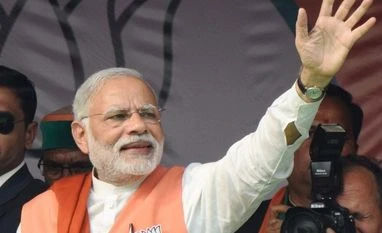 "Laughter is the best resistance to political bullying")












 Connect with us on WhatsApp