Let's get real

Futile to speak of $5trn economy without preparatory work
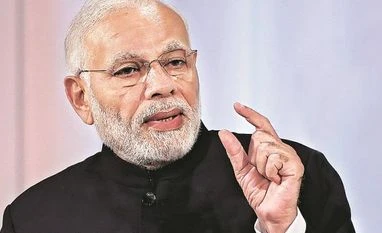
Narendra Modi
Narendra Modi
Business Standard Editorial Comment
3 min read Last Updated : Jun 19 2019 | 1:55 AM IST
Speaking at the fifth meeting of the Governing Council of the NITI Aayog, Prime Minister Narendra Modi said that the government’s goal was to make India a “$5 trillion economy” by 2024, the end of his second term as prime minister. This goal, he admitted, was “challenging, but achievable” if state governments contributed to the effort. This is not the first time that Mr Modi or senior officials and ministers have spoken of this target in this time frame. However, repetition of the goal does not make it any more likely. India’s GDP is currently about $2.71 trillion. What is needed is an 85 per cent increase in output over the next six years, which compares to a 47 per cent increase over the last six. Getting to $5 trillion in six years would require a compound annual growth rate of 11 per cent in nominal dollars. For the next couple of years, even eight per cent growth looks difficult. 

It is good to aim high, and to have stretch targets. But this process should not be taken to the point where it becomes counter-productive, or where the set targets will essentially be unachievable. Other such targets have been spoken of in the past — for example, the goal of doubling farmer income by 2022, which the prime minister reiterated in his speech to NITI Aayog. In any case, what is needed is to focus on the immediate goal of taking the economy out of its current slump, and in the medium term to push it to sustained growth of above eight per cent a year. Double-digit growth has been talked of before, but did not happen. Even today, such ambitions should be reserved for later. Acceleration will come in phases. 

There is considerable preparatory work required in order to super-charge growth. For one, the financial system continues to suffer, the woes of public sector banks being added to by the new troubles of the non-banking financial sector. The problem of who will pay for the infrastructure build-out is also unresolved. NBFCs cannot do it, as the IL&FS fiasco shows. Public-private partnership models have their own problems, and the government cannot find the resources to increase infrastructure funding forever. Depressed corporate earnings and over-capacity in the private sector are weighing on the economy as well. Flexibility of land and labour markets is long overdue. India also has a dysfunctional power sector, with the utilisation of installed generation capacity at just over 50 per cent, even as large parts of the country go without power. In general, the quality and productivity of the country’s physical infrastructure does not stand comparison with the economies of East Asia. Finally, sustained double-digit growth requires growing exports and a healthy, educated and productive workforce. These have not been priorities so far and need a lot of spadework. Once steps have been taken on these and other fronts, it will be time to start talking about double-digit growth.

One subscription. Two world-class reads.

Already subscribed? Log in

Subscribe to read the full story →
*Subscribe to Business Standard digital and get complimentary access to The New York Times

Smart Quarterly

₹900

3 Months

₹300/Month

SAVE 25%

Smart Essential

₹2,700

1 Year

₹225/Month

SAVE 46%
*Complimentary New York Times access for the 2nd year will be given after 12 months

Super Saver

₹3,900

2 Years

₹162/Month

Subscribe

Renews automatically, cancel anytime

Here’s what’s included in our digital subscription plans

Exclusive premium stories online

  • Over 30 premium stories daily, handpicked by our editors

Complimentary Access to The New York Times

  • News, Games, Cooking, Audio, Wirecutter & The Athletic

Business Standard Epaper

  • Digital replica of our daily newspaper — with options to read, save, and share

Curated Newsletters

  • Insights on markets, finance, politics, tech, and more delivered to your inbox

Market Analysis & Investment Insights

  • In-depth market analysis & insights with access to The Smart Investor

Archives

  • Repository of articles and publications dating back to 1997

Ad-free Reading

  • Uninterrupted reading experience with no advertisements

Seamless Access Across All Devices

  • Access Business Standard across devices — mobile, tablet, or PC, via web or app

Next Story



