Letters to BS: Three decades of economic reforms couldn't reduce inequality

India's ranking in Human Development Index has hovered around 130 with no perceptible improvement for many years
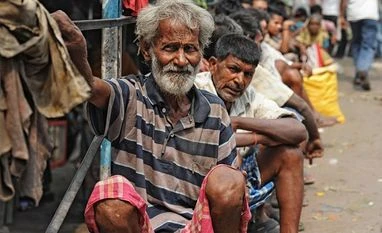
Image via Shutterstock
Business Standard
2 min read Last Updated : Dec 17 2019 | 9:49 PM IST
This refers to “India's HDI disappoints” (December 16). In the Human Development Index (HDI) rankings of the United Nations Development Programme, the position of India has hovered around 130 with no perceptible improvement for many years. This should disappoint all. Though India is the sixth largest economy in the world, the poor HDI ranking clearly points at the inequality between the rich and the poor, which is quite steep. In many parameters of the index, India's position is comparable to our South Asian neighbours. In fact, Sri Lanka's HDI ranking has been consistently better than that of India.
 
Three decades of economic reforms have not been successful in bridging the gap between the haves and the have-nots. The fruits of development haven't reached the poorer sections of the society to the extent desired. The reforms, though started in 1991, have not gathered pace over time. These have happened only in bits and pieces with a big time lag in between. As a result, economic growth hasn't been able to encompass everyone. Another aspect that is worrisome is that the female population has lagged behind its male counterpart in reaping the benefits of development. The inequality in income between men and women is too stark to be missed. The same is the story when one compares the level of education of men and women.
 
To remove this inequality among the different sections of the society, the strategy has to be two-pronged. First, economic reform must be made robust, fast-paced and irreversible so as to generate consistent high growth. Second, a mechanism/process should be developed to balance regional disparities and reduce inequality among different sections of the society by associating everyone in the growth journey.
 
Sanjeev Kumar Singh, Jabalpur Letters can be mailed, faxed or e-mailed to: 
The Editor, Business Standard
Nehru House, 4 Bahadur Shah Zafar Marg 
New Delhi 110 002 
Fax: (011) 23720201  ·  
E-mail: letters@bsmail.in
All letters must have a postal address and telephone number
 

One subscription. Two world-class reads.

Already subscribed? Log in

Subscribe to read the full story →
*Subscribe to Business Standard digital and get complimentary access to The New York Times

Smart Quarterly

₹900

3 Months

₹300/Month

SAVE 25%

Smart Essential

₹2,700

1 Year

₹225/Month

SAVE 46%
*Complimentary New York Times access for the 2nd year will be given after 12 months

Super Saver

₹3,900

2 Years

₹162/Month

Subscribe

Renews automatically, cancel anytime

Here’s what’s included in our digital subscription plans

Exclusive premium stories online

  • Over 30 premium stories daily, handpicked by our editors

Complimentary Access to The New York Times

  • News, Games, Cooking, Audio, Wirecutter & The Athletic

Business Standard Epaper

  • Digital replica of our daily newspaper — with options to read, save, and share

Curated Newsletters

  • Insights on markets, finance, politics, tech, and more delivered to your inbox

Market Analysis & Investment Insights

  • In-depth market analysis & insights with access to The Smart Investor

Archives

  • Repository of articles and publications dating back to 1997

Ad-free Reading

  • Uninterrupted reading experience with no advertisements

Seamless Access Across All Devices

  • Access Business Standard across devices — mobile, tablet, or PC, via web or app

Topics :Human Development IndexPoverty in IndiaInequality in India

Next Story



