Many analysts have been criticising the model of goods and services tax (GST) from different points of view, one of the reasons being the collection of revenue has not been as expected. But the fundamental structure of GST has also been attacked. This is where I want to add my observations to say that nothing is wrong in it.
First, analysts say that GST is essentially a flat tax. And by not designing it as a flat tax, there has been a mistake. The fact is that GST is not a flat tax. In major countries like Germany, France, the UK, Italy, Russia, Sweden, and China there are four to seven rates. In Canada, there is one central rate of 7 per cent, but several rates of provincial sales tax. Only in Japan, Australia, New Zealand, and some African countries, there is a flat rate. So multiple rates are the norm, and not a flat rate. Making it a flat rate will be a dangerous mistake for India. Three rates are the best, with limited exemptions.
The second criticism is that it was a mistake that 14 per cent guaranteed rate of compensation to states was too high. It is not a mistake since a guaranteed rate was necessary to make states agree. The slowdown in the economy and less collection were not anticipated by either the Center or states. Compensation cess is for five years, but that can be extended and increased by the GST Council.
Third, it has been said by analysts it was a mistake that many important items like petroleum, tobacco, and liquor have been kept out of the GST fold. This was not a mistake if we recollect the long and protracted discussion and difference of opinions on this issue. States would never have agreed to include all items since they would have lost all opportunity to raise revenue on their own. They wanted to preserve their fiscal federalism. So keeping these items was a compromise. Even in the European Union, there are some items like cigarettes, beer, wine, spirits, and gasoline which were out of VAT and in 2001, the excise revenue as a percentage of total tax revenue was 9.6 (Sijbren Cnossen; Tax Policy in the European Union 2001, p 36).
The fourth criticism is that it was a mistake to include more goods in the 5 per cent rate to bring prices down in the run-up to election which has led to more input credit compared to the final rate of GST on the output. The fact is that this sort of situation of input credit more than the tax payable has always been there. In the UK and other developed countries, a refund is given. In India, we have been traditionally solving this problem in CENVAT by increasing the output duty. It is not a widespread concern. It is sporadic. Only in a few such cases occur. Usually, value addition in the final output takes care of it.
Actually, there was no mistake at all in the design of GST. There could be surely many cases of fake invoices for taking input tax credit but those were there earlier also. The government replied to a parliamentary question on July 2, 2019, in which it was disclosed that in 2018-19, 1,620 cases of fake invoices were registered involving an evasion of Rs 11,251 crore and 154 persons were arrested. Obviously, a lot of this evaded tax will be realised. So, it is not full evasion but only an attempt. Even the story of evasion is highly exaggerated since a large percentage of cases fail judicial scrutiny. Invoice matching was never done in the pre-GST situation both in regard to State VAT and CENVAT. I know it for certain. Only audit and intelligence-based checks were being done. If there was no furore about evasion at that time, why is there so much furore now? Actually, it is the slowdown and lower rate of duty which is responsible for low collection. Not for any structural flaw or evasion. Surely more anti-evasion measures and wider audit should be mounted. There should be more checks on the export side since star-exporters get less checked which they misuse. The revenue officers must independently check the authenticity of the so-called star exporters without harassing them.
The writer is member, Central Board of Excise & Customs (retired)
Email: smukher2000@yahoo.com
Read this article for free
Register to continue reading premium journalism and analysis from Business Standard.
Disclaimer: These are personal views of the writer. They do not necessarily reflect the opinion of www.business-standard.com or the Business Standard newspaper

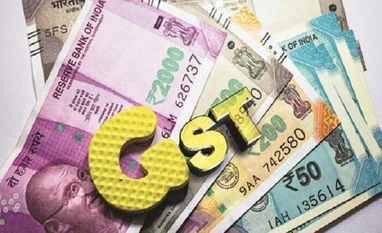 "Some criticism of GST put in proper perspective")












 Connect with us on WhatsApp