Conventional wisdom in sporting circles dictates that sports and politics are distinct activities and the twain should never meet. In reality, this separation is an artificial one. Like people in any other profession, sportspeople, too, can hold political views and should have the right to express them. Two incidents within a week of each other involving Muslim sportspeople in different continents brought the issue into the limelight once again. The first was a statement by Arsenal mid-fielder and German national footballer of Turkish origin Mesut Ozil. He criticised China’s treatment of the Uighur minority and wondered why the rest of the Islamic world had not raised its voice in solidarity. The move provoked a sharp response from the Chinese authorities. The Arsenal-Manchester City Premier League fixture was blacked out and Ozil was removed from a popular e-football computer game by the publisher of the game. China is the world’s fastest-growing market for European football teams, so in a sense the fallout cost advertisers, sponsors, and the club (and perhaps Ozil himself) a lot of money. No surprise, he found no support from the club, which immediately put out a statement distancing itself from Ozil’s views, though his former manager Arsene Wenger said he had the right to voice his opinion.
Ozil, who exited the German national team a few years ago complaining of being targeted for his religion and ethnicity, would have found himself in good company in the Indian cricketer Irfan Pathan, the medium pacer and key member of the 2007 World T20 winning squad. Pathan, who currently coaches the Jammu & Kashmir cricket team and is a popular TV broadcaster, was trolled by the saffron elements on social media for tweeting his support for Jamia Millia Islamia students, who had suffered at the hands of the police for their protests against the Citizenship Amendment Act. Pathan’s response was a dignified interview in The Indian Express that set out his credentials as an Indian first and a Muslim second, and pointed out that he did not need permission in his own country to air his views. As a reminder of the democratic and secular nature of India, the message could not have been more pointed.
Pathan, however, has been out of the national cricketing establishment, so his comments did not erupt into a major controversy. Ozil, whose footballing star is waning, still commands a large fan following in the growing markets of Asia. So, as Arsenal’s response showed, a good part of the reason for the nervousness on the part of sports administrations is the impact political statements can have on sponsors and advertisers, especially in team events such cricket or football. That is partly why most sports bodies prohibit the airing of political slogans at matches and tournaments. This is less of a problem with individual sports. Thus, Mohammad Ali was able to champion openly black rights through his membership of the controversial Black Nation of Islam, an association that ended up enhancing his considerable if eccentric star power.
In 1989, the Chinese-American tennis player Michael Chang could end his victory speech after winning the French Open with an oblique criticism of China’s authoritarian crackdown against protestors at Tiananmen Square. “And god bless China,” he mumbled. This was widely remarked on at the time, but drew no censure from the ATP (or China, where tennis was virtually non-existent). The acute competitiveness of international sports demands that sportspeople cannot allow themselves the luxury of distraction. When they do choose to exercise their political views, however, they do not deserve to be censured any more than the next person.

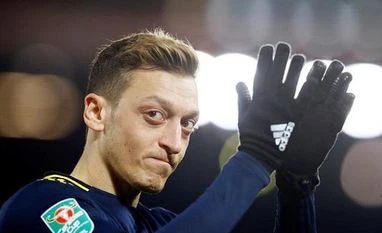 "Sports and politics")












 Connect with us on WhatsApp