Talking to a revolution

For the millions of newly emerging smart phone users, voicing a query or recording a message is much easier than typing into a tiny keyboard
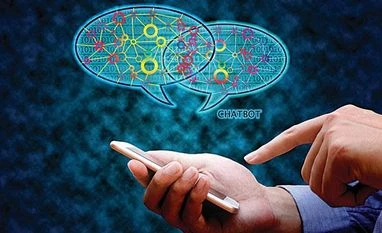
Talking to a revolution
Meet Shelly, Shell's Siri-like bot to answer queries on vehicle lubricants
Pranjal Sharma
4 min read Last Updated : Apr 17 2019 | 10:33 PM IST
Talking to devices is no longer a fad in India. From corner rooms populated by CXOs to coworking spaces buzzing with millennials, conversations with robotic voices emanating from lifeless devices more the norm than exception.

Consumers are becoming increasingly comfortable for automated voices informing or guiding them. Hey Cortana, Alexa, Google and Siri are now common prefixes for voice-based queries in India.

Google Home device is selling briskly online. Amazon’s Echo devices with voice assistant Alexa is fairly well known in Indian cities. Microsoft’s Cortana is being downloaded with enthusiasm. According to International Data Corporation, about 753,000 smart speaker devices were shipped to India in 2018. The market can only grow exponentially.

“Indian consumers are in sync with global trends. Virtual digital assistants (VDAs), which are automated software applications or platforms that assist the human user through understanding natural language in written or spoken form, are rapidly gaining traction in consumer and enterprise markets alike,” says a report by market intelligence firm Tractica.

Though smart phone-based VDAs are most popular the usage is expanding to other devices. These include smart watches, fitness trackers, automobiles, smart home systems, PCs and TVs. It is not just savvy urban users in megapolises. Consumers across the country are chatting up bots to save on their typing effort. For the millions of newly emerging smartphone users, voicing a query or recording a message is much easier than typing into a tiny keyboard. Most are leaping from using a simple mobile to a one smart one with voice-enabled features.

“Unique active consumer VDA users will grow from 390 million in 2015 to 1.8 billion worldwide by the end of 2021,” says Tractica. “During the same period, unique active enterprise VDA users will rise from 155 million in 2015 to 843 million by 2021.” The market intelligence firm forecasts that total VDA revenue will grow from $1.6 billion in 2015 to $15.8 billion in 2021.

VDAs are just one of the many uses of natural language processing (NLP) ability of artificial intelligence. Tractica says that NLP has more than 42 uses across 14 industry segments. “While NLP is most commonly understood as a user interface (UI) technology, it is also a critical technology for extracting insights and analysis from a vast amount of previously unindexed and unstructured data, mining video and audio files, emails, scanned documents, and more,” the report says. The NLP software market is set to grow from $136 million in 2016 to $5.4 billion by 2025 globally. The maximum growth and potential is seen in countries like India, which has multitude of languages. 

Simply put, many government welfare information, skilling programmes and health care advice can be delivered using NLP and voice based solutions.

NLP may be a novel concept for Indian consumers, but researchers in the country have been working on it for decades. The Centre for Indian Language Technology was set up at the Indian Institute of Technology (IIT) Mumbai under a grant from the central government in 2000. IIT Mumbai though had a team working on NLP since 1996. Global companies and young startups are now offering enterprise and consumers solutions to Indians.

Though most of the voice-activated solutions are based in English, work is on to create solutions in Indian languages. Users can speak to Google Home in Hindi. Amazon has launched Alexa Cleo to learn Indian languages from it users. Users can answer Alexa in their language in a crowd-sourced effort of skilling the artificial intelligence.

Using our voices to teach artificial intelligence to automatically talk back to us in our language is the new era we live in.

One subscription. Two world-class reads.

Already subscribed? Log in

Subscribe to read the full story →
*Subscribe to Business Standard digital and get complimentary access to The New York Times

Smart Quarterly

₹900

3 Months

₹300/Month

SAVE 25%

Smart Essential

₹2,700

1 Year

₹225/Month

SAVE 46%
*Complimentary New York Times access for the 2nd year will be given after 12 months

Super Saver

₹3,900

2 Years

₹162/Month

Subscribe

Renews automatically, cancel anytime

Here’s what’s included in our digital subscription plans

Exclusive premium stories online

  • Over 30 premium stories daily, handpicked by our editors

Complimentary Access to The New York Times

  • News, Games, Cooking, Audio, Wirecutter & The Athletic

Business Standard Epaper

  • Digital replica of our daily newspaper — with options to read, save, and share

Curated Newsletters

  • Insights on markets, finance, politics, tech, and more delivered to your inbox

Market Analysis & Investment Insights

  • In-depth market analysis & insights with access to The Smart Investor

Archives

  • Repository of articles and publications dating back to 1997

Ad-free Reading

  • Uninterrupted reading experience with no advertisements

Seamless Access Across All Devices

  • Access Business Standard across devices — mobile, tablet, or PC, via web or app

More From This Section

Disclaimer: These are personal views of the writer. They do not necessarily reflect the opinion of www.business-standard.com or the Business Standard newspaper
Next Story



