The appointment of Tata Consultancy Services (TCS) Vice-Chairman Mr Ramadorai, who is also on the Board of AirAsia India, as non-executive Chairman of the National Skill Development Corporation (NSDC), a public sector enterprise with the mission of rapidly skilling India's workforce, has set off considerable soul searching among policy-watchers. At question is not Mr Ramadorai's professional credentials, or his integrity, (which are both unassailable), or even (for the present opinion piece) how he was selected to a presumably public service position in a field with clearly several qualified candidates. Nor is it at all about Mr Ramadorai, the individual. It is about the larger issue of safeguards against potential conflict of interest of people appointed to positions of fiduciary character ("trust") with respect to the government. The particulars of Mr Ramadorai's appointment brings into sharp relief key aspects of this important policy issue.
The position with respect to permanent civil servants is long settled. They must have prescribed credentials, and be selected by open competition among all qualified candidates conducted by a body (the Union Public Service Commission) endowed with Constitutional guarantees of independence. During their service, they may have no association with potential outside influences on their decision-making - political parties, corporations or foreign governments. After retirement, the restrictions against corporate (though not political) affiliation apply for a prescribed period of time. The detailed position on some aspects regarding other public service positions with defined constitutional/statutory functions and tenure (for example, regulators, CAG) is still evolving - although, in relation to potential conflict of interest, prohibitions against political and corporate affiliation remain rigorous, and in the case of constitutional authorities there is also a permanent injunction against post-tenure appointment to offices of profit under the government. Even advisors (with or without defined tenure), including those who are expected to work strictly pro bono, who assist in decision-making (such as members of statutory state environmental appraisal committees) are public servants under the law, subject to prescribed tests of conflict of interest as well as the conduct rules of civil servants, which are largely designed to keep them out of the clutch of malign forces (influence peddlers, street walkers, marijuana).
However, the government also seeks professional services of various kinds from outside the government (such as lawyers' services, management consultants). These comprise inputs to decision-making, and are not themselves part of the defined decision-making process. Such service providers cannot be expected to divest themselves of all their non-governmental clientele for the privilege since the services required by the government are of sporadic and contingent nature. Typically, these contracts have confidentiality clauses, and the providers themselves are (usually) subject to norms of intellectual and financial integrity enforced by their respective professional associations. In their selection, however, the government would be prudent to ensure that active or recent association with outside parties that may directly introduce a bias in their advice are absent. Thus, if the government pursues a tax case against a company in court, it would do well to avoid a lawyer who was engaged by the same company in the recent past.
There are several examples of corporate honchos who have been drafted into public service positions in recent years. Their individual credentials are outstanding (Messrs Nandan Nilekani, Arun Maira and Ajay Mathur). In some cases, a defined open competitive selection process was followed, since the positions are part of the regular civil service (Ajay Mathur). Should they have been required to (as opposed to voluntarily) relinquish their corporate positions? In each of these three cases, fiduciary roles are involved, since the positions they hold are part of the formal governmental decision-making process. Any outside affiliation that may potentially affect their judgement is unacceptable. Thus, while all have relinquished their prior corporate positions, their doing so voluntarily is immaterial. It should be a pre-requisite to appointment.
So, where does Mr Ramadorai sit? As non-executive Chairman of NSDC, is his role of fiduciary character or is it that of a service provider? It may be argued that he is working pro bono on the NSDC Board. That fact, as we have seen above, is inconsequential. It may also be argued that his position is outside the government, NSDC being a publicly owned company. That too, is immaterial. It would be an evil day if public resources committed or public services provided escape public accountability requirements (CAG, CVC, Cabinet, Parliament) through the constitution of a dedicated company. The unavoidable bottom-line is that, as chairman of the board, he is part of the formal decision-making process of an executive agency of the government. His position is thus of fiduciary character. He cannot, therefore, in good faith, continue concurrently with his corporate positions.
Some would, however, argue: if we are so strict then it would be difficult to attract the best talent from the corporate sector to government service. However, the way is still open for the government to avail of Mr Ramadorai's talents by contracting him as a consultant, i e service provider. Still others would urge, that Mr Ramadorai's affiliations (TCS, AirAsia) have little, or if at all, a benign, relationship with Mr Ramadorai's NSDC charge. Such a claim, is, however, difficult to verify, or to guarantee that it will remain so during Mr Ramadorai's tenure. As the late Prof James Buchanan admonished policy-makers: "When building public institutions, act on the premise that the public's worst enemy will run them".
The author is a retired Secretary to the Government of India and currently Distinguished Fellow, TERI

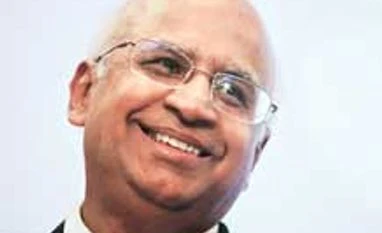 "The important matter of Mr Ramadorai")


 Connect with us on WhatsApp