The sociology of the slowdown

The last economics guy to take sociology into account was Milton Friedman, says the author
inflation
.
T C A Srinivasa-Raghavan
4 min read Last Updated : Sep 06 2019 | 9:07 PM IST
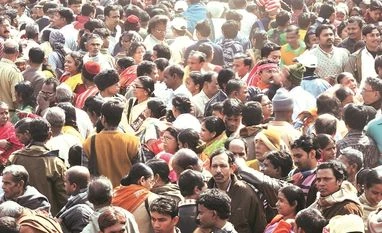
Here’s a hypothesis about the slowdown in two parts that better minds than mine should test: First, the current economic slowdown has its roots more in sociology than in economics; second, it applies only to urban India and, even there, to that subset which can consume things other than food and wage goods in quantities large enough to make a difference. The number is very tiny: Around 50-70 million people, of whom the self-employed are around 75 per cent.

Meanwhile, urbanisation has resulted in what I call the pre-nuclear family problem, where a full joint family has been replaced by a truncated one. So, collective consumption costs instead of being distributed, have become concentrated. 

This is a transition problem that happens in all rapidly urbanising societies. In a fully nuclear family, the income earner is responsible for only the spouse and children. And, more often than not, there are two income earners.

In contrast, in the pre-nuclear family model that we have in India now, there is usually only one income earner who has to pay the bills for more people than just the spouse and children. 

Therefore — and here’s my theorem: “Unless income grows fast enough to outpace price inflation in services, which are in demand because of urbanisation, the consumption of industrially produced things will begin to slow down.” 

This is what we are witnessing now. It is in this sense that I think it is structural, and not just in the plain vanilla economic one that economists like to worry about. Those economic models, howsoever valid in themselves, are incompletely specified because they do not account for sociological phenomena. 

The last economics guy to take sociology into account was Milton Friedman with his permanent income hypothesis in the early 1950s. 

He needs a closer look for applicability in India. He had said people consume according to what they think they will earn over a lifetime and that it is changes in permanent expected lifetime income that drive current consumption. This is a crucial insight.

Services inflation

Something like this may have begun to happen in India. But we are clueless about it partly because we don’t measure services inflation properly. Not only are the weights in its consumer price index inappropriate, demand elasticities don’t seem to be worked in at all, perhaps because it can’t be done.

So the price line the urban middle-to-upper income consumer faces is much higher than believed. Thus, annual inflation in services, all taken together, is very high.  

Thus, according to the latest CPI, since August 2014 health care costs have grown 30 per cent, “recreation” costs 24 per cent, communication, which includes phones, internet etc, 30 per cent, education 30 per cent, and personal care 23 per cent. Health care and personal care may be an occasional expenses but the rest are continually consumed and inelastic.

So while inflation in the prices of goods may not have been much, for services it has been brutal. Just think of a family of six with four-six mobile phone bills, TV channel subscriptions, bus, metro and taxi fares, school fees, etc. Then there is the domestic help as well.

Had incomes been rising apace, this may not have mattered much. But they are not. In fact, since 2014, average increases in income — for those who still have jobs — have been around 3-5 per cent. And these very people are now paying between 50-55 per cent as some sort of tax. 

There are the self-employed, of course, about whom, like the informal sector, official statistics say very little. I think it is they, if anyone at all, who are holding up consumption. 

That, in fact, is the good news because the slowdown is almost entirely due to the salaried persons. As to the so-called informal sector, it doesn’t really matter because per capita incomes there are tiny.

What can be done? 

We are in a consumption doldrum. Such doldrums happen from time to time. There’s nothing “cyclical” or “structural” about them. They are, if anything, the opposite of an artificially induced credit boom of the sort we saw from about 2004 onwards.

The effects of a credit book take a long time to wind down — 2011 to date. When they do they leave the economy gasping. Irving Fisher had analysed this phenomenon back in the 1930s.

No one can say how long it will take for the winds to start. Until then the government — which is like a captain on a ship in the doldrums — should be patient and not rush about ridiculously trying to blow wind in the sails.

One subscription. Two world-class reads.

Already subscribed? Log in

Subscribe to read the full story →
*Subscribe to Business Standard digital and get complimentary access to The New York Times

Smart Quarterly

₹900

3 Months

₹300/Month

SAVE 25%

Smart Essential

₹2,700

1 Year

₹225/Month

SAVE 46%
*Complimentary New York Times access for the 2nd year will be given after 12 months

Super Saver

₹3,900

2 Years

₹162/Month

Subscribe

Renews automatically, cancel anytime

Here’s what’s included in our digital subscription plans

Exclusive premium stories online

  • Over 30 premium stories daily, handpicked by our editors

Complimentary Access to The New York Times

  • News, Games, Cooking, Audio, Wirecutter & The Athletic

Business Standard Epaper

  • Digital replica of our daily newspaper — with options to read, save, and share

Curated Newsletters

  • Insights on markets, finance, politics, tech, and more delivered to your inbox

Market Analysis & Investment Insights

  • In-depth market analysis & insights with access to The Smart Investor

Archives

  • Repository of articles and publications dating back to 1997

Ad-free Reading

  • Uninterrupted reading experience with no advertisements

Seamless Access Across All Devices

  • Access Business Standard across devices — mobile, tablet, or PC, via web or app

Topics :InflationeconomyUrban IndiaUrbanisationEconomic slowdown

Next Story



